

🧭 Whose Unconditional Surrender?
🧭 Morning Compass — Thursday, June 18, 2026

More, including Morning Compass 🧭, gives you the deeper context, a historical frame, and a European angle on the news you are already following. If that layer of the story matters to you, consider supporting this work:
What’s the news
Trump called it a major win. Iran called it a record of American failure. They can’t both be right.
On Wednesday, Trump signed a 14-point memorandum of understanding with Iran at the Palace of Versailles — the town where the Treaty of Versailles, which ended World War I, was signed in 1919.
The symbolism was hard to miss: Trump signed right where Germany, as the initiator of WWI, signed the surrender agreement that included paying massive reparations to the countries it had attacked. I have no doubt that most people present knew the historic significance and that Trump didn’t. I just wonder if anyone dared to inform him.
The document is not a final peace treaty. It is a ceasefire framework and a 60-day clock for negotiating a comprehensive deal. Whether that deal ever materializes is a different question, and an important one.
Let’s go back to where this started. In February, Trump launched Operation Epic Fury against Iran. His objectives shifted throughout the conflict, but among the things he demanded at various points were the destruction of Iran’s nuclear program, the obliteration of its missile arsenal, the severing of ties to proxy groups like Hezbollah and Hamas, and what he called, more than once, unconditional surrender. He suggested regime change was coming.
None of that happened.
Iran’s government is still in place. Its missile program remains largely intact. According to a classified CIA assessment reported by The Washington Post, Iran retains roughly 70 percent of its prewar missile stockpile and 75 percent of its mobile missile launchers. Analysts describe Iran’s ties to Hezbollah, Hamas, and the Houthis as resilient and, in some cases, politically strengthened by the conflict. The supreme leader was killed in the opening strike, but the Revolutionary Guards are firmly in control, and a new supreme leader has stepped in.
So what did the US get in practical terms? The Strait of Hormuz will reopen. That is the only immediate, tangible gain. And the strait was open before the war began.
In exchange for that, the US committed to lifting all sanctions on Iran — not just nuclear-related ones, but UN Security Council resolutions, IAEA resolutions, and all unilateral US sanctions, on a timetable to be agreed in a final deal. It agreed to unfreeze Iranian assets. It agreed to issue immediate waivers for Iranian crude oil exports, letting Iran sell freely on the world market again, no longer through shadow tankers at discounted prices to China, but openly, to anyone. The memorandum sketches a reconstruction and economic development package of at least $300 billion, to be developed with unnamed “regional partners” — widely understood to mean Gulf states, some of whom say they were not consulted before the deal was signed. Trump says the US won’t contribute to that fund. We’ll see.
On the nuclear question, Iran “reaffirms” it will not develop a nuclear weapon. That word is the tell. Iran said the same thing in the 2015 agreement — the deal Trump tore up in 2018. The details on enrichment and Iran’s existing stockpile of highly enriched uranium are deferred to the final agreement. Negotiators speak of “downblending” some of that stockpile on-site under IAEA supervision, rather than shipping it out of the country, as Iran was required to do in 2015. The strait is toll-free for 60 days. After that, Iran negotiates with Oman over “the future administration and maritime services” of the strait — language that seems to open the door to fees or renewed leverage over shipping.
Iran’s chief negotiator, Mohammad Bagher Ghalibaf, boasted on state television that Iran had achieved through negotiations what it had sought through military action “several times over” — gains he said were “not even comparable” to what war could have delivered.
Now here is the comparison that tells the whole story. In 2015, Obama negotiated a nuclear deal with Iran. Trump tore it up in 2018, calling it the worst deal ever made. Under that deal, Iran had to keep uranium enrichment at low levels. It had to dramatically reduce its centrifuge count. It had to ship most of its enriched uranium stockpile out of the country. It was submitted to strict IAEA inspections. In exchange, sanctions specifically related to the nuclear program were lifted — not all sanctions, just those.
Under Trump’s memorandum, Iran does not have to stop enriching uranium. The two sides will “discuss the issue of enrichment” over the next 60 days. Iran keeps its stockpile and may downblend some of it locally. All sanctions — every category — are set to be terminated. Iran gets a $300 billion reconstruction package. And the strait is only guaranteed toll-free for two months.
The Obama deal Trump destroyed was much stricter than what Trump just signed. That is a factual comparison of two documents.
Republican senators are not hiding their fury. Bill Cassidy of Louisiana said it directly: before the war, the strait was open, Iran was being crushed by sanctions, and 13 service members were still alive. Now they are dead. Families paid billions more at the pump. And the bombing has stopped in exchange for giving Iran enormous relief. He called it the worst foreign policy blunder in decades. Ted Cruz called it a disaster. Mike Pence used the word appeasement. Nikki Haley asked why the US is planning to help rebuild a regime that chants death to America. Thom Tillis said he cannot see how the arithmetic adds up: lives lost, hundreds wounded, tens of billions spent, for an outcome that starts from a weaker position than January.
Former Secretary of State Antony Blinken put it plainly in a widely shared piece: the ceasefire’s only achievement is reopening a strait that was open before the war — and the US will “apparently pay Iran to do so” through sanctions waivers and oil revenue.
Trump’s own explanation for why he settled was inadvertently honest. He told reporters at the G7 in France that he did not want to become another Herbert Hoover — he did not want to preside over economic catastrophe. Iran’s ability to close the Strait of Hormuz — through which roughly a fifth of the world’s traded oil moved before the war — gave it a weapon that no amount of bombing could neutralize. Iran used it. It worked.
Every American president before Trump understood this risk. The closure of the Strait of Hormuz — and the global economic shock that would follow — was precisely why previous administrations chose to negotiate with Iran rather than attack it. Trump went to war anyway. Iran closed the strait. The economic pressure became unbearable. And now the US is settling on terms worse than what diplomacy had already achieved.
Every adversary of the United States is watching. They have learned that closing a critical shipping lane can bring the world’s most powerful military to the table on disadvantageous terms.
Now consider what happens in 60 days. The two sides are supposed to negotiate a comprehensive agreement. But they do not have one now. The nuclear question — how much Iran can enrich, what happens to its stockpiles, what verification looks like — remains entirely unresolved. The Obama administration spent two years negotiating those details. The idea that they can be settled in 60 days, between two sides that spent the last four months bombing each other, is not credible.
So what happens on day 61? That lands in mid-August, close to the midterm campaign season. Trump has already said he will go back to bombing if the deal collapses. But the US and Israel, with their combined military power, spent months bombing Iran and could not force the concessions Trump demanded. There is no reason to think a second round would produce a different result. Iran knows this. So does everyone watching.
The Iran file is not closed. It will follow Trump for the rest of his presidency. And the terms on which it was left will be studied for a long time. It’s America’s own version of the Suez crisis; another end-of-an-era date you will later find in history books.
Today, there is a 20% discount for the first year for a subscription to More, including Morning Compass 🧭 and the videos on Morning Comments 🎙️
What to watch today
Ukraine launched its largest drone attack on Moscow in years overnight. Nearly 1,000 drones were fired across Russia. A major oil refinery in southeastern Moscow — supplying more than a third of the capital’s fuel needs, including its airports — was set on fire. All four Moscow airports were closed for hours. Zelensky said directly: if Ukraine burns, Moscow burns too. Russia’s hard-liners are calling for escalation. Putin is hosting an ASEAN summit in Kazan. How he responds matters.
The Obama Presidential Center opens today in Chicago. It is a 19-acre campus on the South Side with a museum, a public library branch, an NBA-sized basketball court, a women’s garden, and an open lawn. The ceremony features Stevie Wonder, Bruce Springsteen, Bono, Jennifer Hudson, and John Legend. Every living president will be there except one. Trump was not invited. Organizers said the event is a celebration for those who helped get Obama where he is.
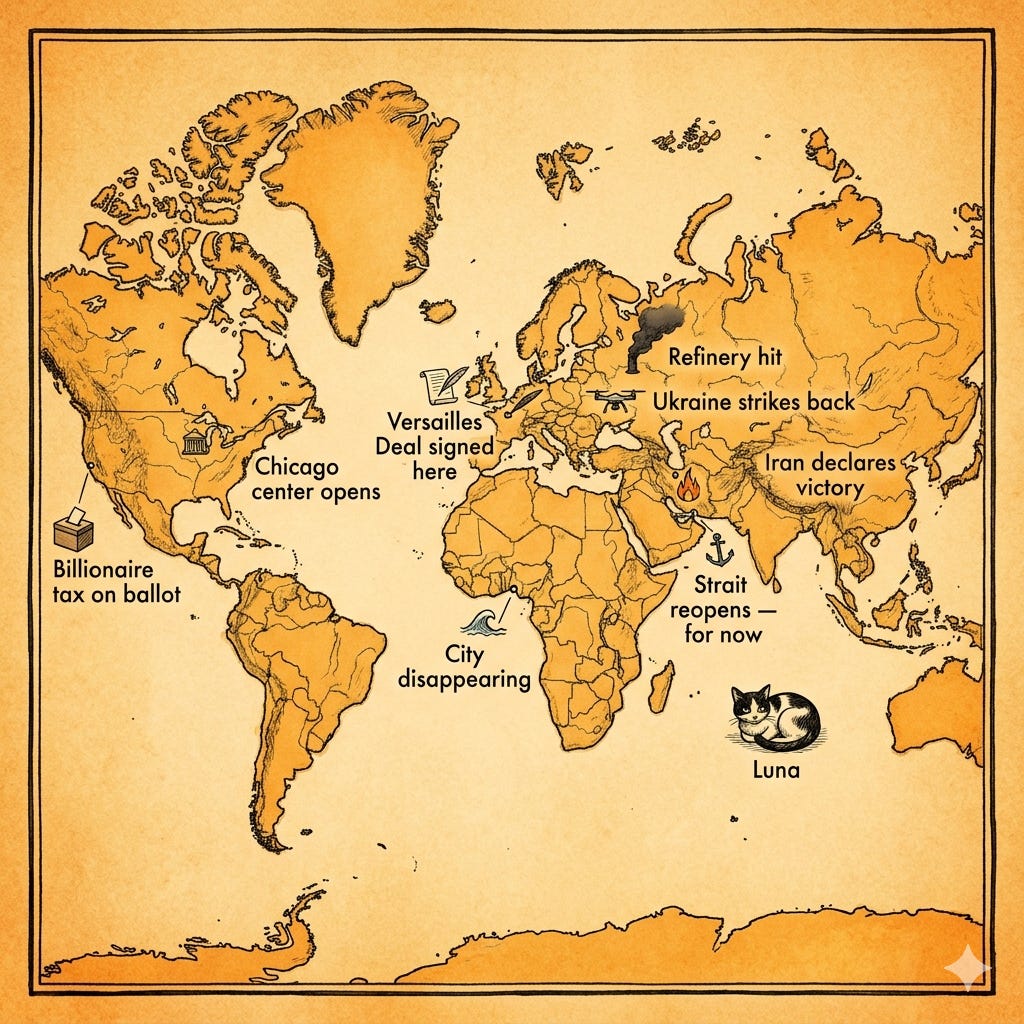
In California, a proposal to tax billionaires has officially gathered enough signatures to appear on the November ballot. It would impose a 5 percent levy on assets exceeding $1.1 billion, with most of the revenue going to healthcare. Governor Gavin Newsom strongly opposes it and has until June 25 to negotiate a deal to pull it. If it goes to voters, it will be one of the most expensive ballot fights in California history.
And a Nigerian coastal community called Ayetoro — once known as the Happy City — is disappearing beneath the Atlantic. More than half the town has already been swallowed by the sea. Homes, schools, and churches are gone. Climate change, including rising sea levels, is driving the destruction. People are rebuilding in the same place because they have nowhere else to go. No sea walls. No government support. Just families watching the ocean take their lives apart, piece by piece.
On this day
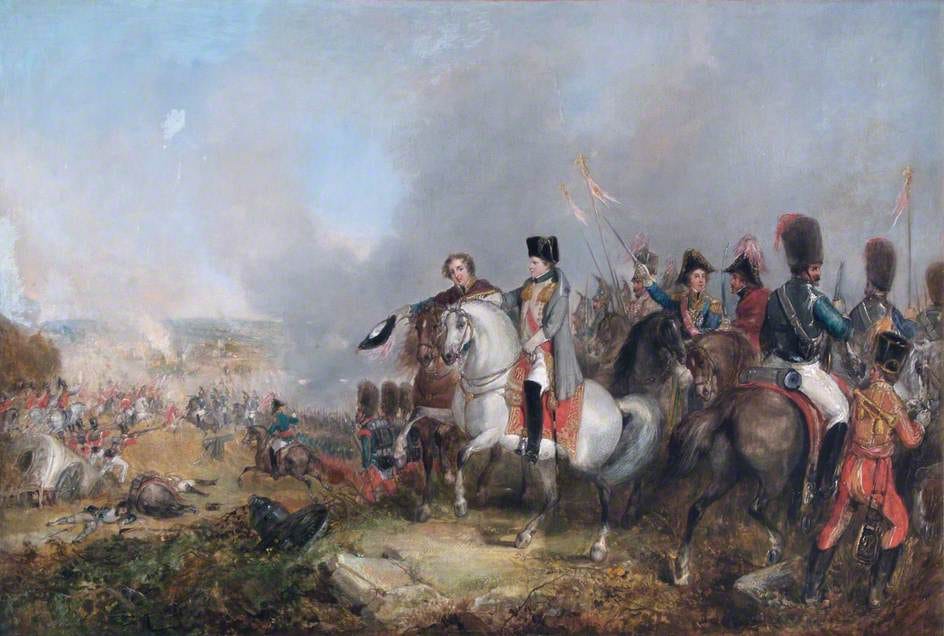
On June 18, 1815, Napoleon was defeated at Waterloo. British and Prussian forces ended the French Empire in a single day. In 1979, Jimmy Carter and Soviet leader Leonid Brezhnev signed the SALT II arms limitation treaty in Vienna — the kind of painstaking, verified, multilateral agreement that took years to build and that the Iran MOU conspicuously lacks. In 1983, Sally Ride became the first American woman in space, aboard the Challenger.
Today is
Today is Sustainable Gastronomy Day, a UN observance recognizing the role food systems play in climate, culture, and biodiversity. It is also International Picnic Day.
What I wrote


What I captured
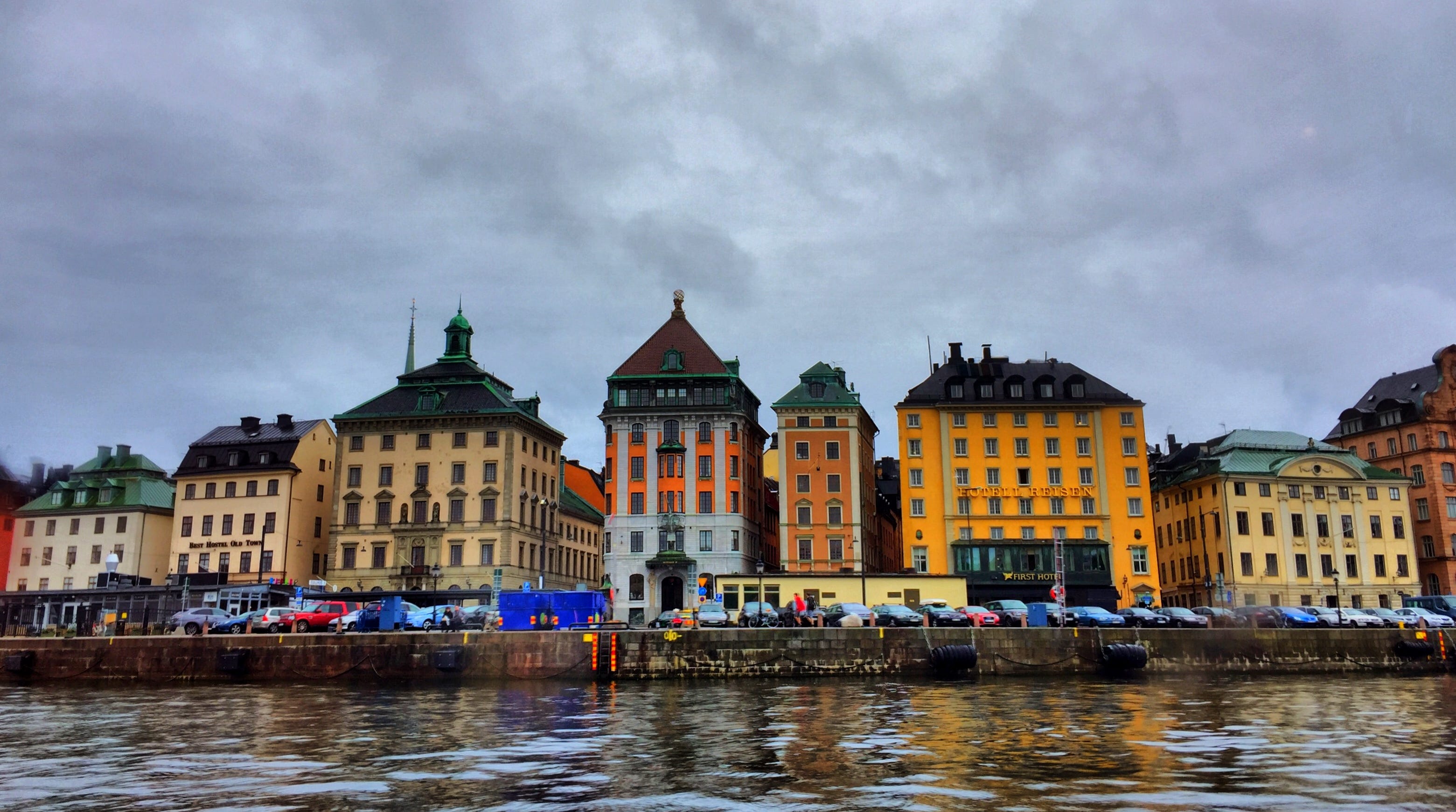
Exactly ten years ago today — June 18, 2016 — I was returning home from a meeting at the Stockholm Environment Institute. I took the small ferry from Djurgården, the extraordinary island in central Stockholm that functions as the city’s green lung, across to Gamla Stan, the medieval old town. Just before arriving, I took a photo of the old houses on the waterfront, capturing the ochre and amber facades reflected in the water.
What I’m working on
The next Daybreak Notes and Beans, and Part Two of the Screen Skills series on how to use the Substack app. I’ll likely publish these tomorrow. And maybe there is time for a video.
And I would like to know
I have done my best to find something genuinely positive in what Trump achieved with this Iran deal. I cannot find it — beyond extinguishing a fire he started himself. But I may have missed something. If you can think of one real achievement that came out of this war and this agreement, tell me here.
On More and the Morning Compass
You just read the Morning Compass — a daily briefing that arrives while you are still on your first coffee. It tells you what happened overnight, the European perspective on what Americans are living through right now, what to watch today, and gives you something worth talking about. Morning Compass is published inside the More newsletter.
Morning Comments, the daily video companion to Morning Compass, is also published in More.
If this kind of independent analysis matters to you, consider becoming a paid subscriber:
Stumbled upon
This is how Armadillos collect leaf litter, which they use to build nests inside their burrows
For my series on kindness:
When his friend falls, this donkey lies down to hug him & waits for him to get up.
Notes and sources
Iran deal MOU full text: CNN, ‘US releases official agreement with Iran. Read the 14-point text’ — https://www.cnn.com/2026/06/17/middleeast/us-iran-war-mou-text-intl
Trump demanded unconditional surrender, then settled: The New York Times, ‘Trump Demanded Iran’s Unconditional Surrender. He Got a Surprise Instead.’ — https://www.nytimes.com/2026/06/17/us/politics/trump-iran-deal-nuclear-program-strait.html
NYT editorial board: The New York Times, ‘Trump Lost The War He Started In Iran’ — https://www.nytimes.com/2026/06/15/opinion/-trump-lost-war-iran.html
Republican backlash in Senate: The Hill, ‘Senate Republicans raise alarm over Trump’s deal with Iran’ — https://thehill.com/homenews/senate/5929430-trump-iran-deal-republican-backlash/
Heather Cox Richardson full analysis: Letters from an American, June 17, 2026
Euronews: ‘US and Iran sign deal, but who really won?’ — https://www.inkl.com/a/gVqQWLHMzLZ
The Guardian: ‘Donald Trump’s Iran deal met with anger, relief and incredulity’ — https://www.inkl.com/a/wVAXBMTvagk
The Independent: ‘Worst foreign policy blunder in decades: Republicans turn on Trump’ — https://www.inkl.com/a/AkwoPNuyJbX
The Conversation: ‘What’s in the US-Iran peace deal? A lot of concessions and empty promises’ — https://www.inkl.com/a/ZQlWpYuaMpl
Prices after the war: AP, ‘Higher prices for gas, groceries and flights will likely outlast the Iran war’ — https://apnews.com/article/iran-war-prices-gasoline-groceries-flights-9c413bc111efcfa9bac53b20e9057738
Dutch analysis: NOS, ‘Trump trekt aan kortste eind én helpt Iraanse regime steviger in het zadel’ — https://nos.nl/l/2619110
Ukraine drone attack on Moscow: The Guardian / First Thing — https://www.inkl.com/a/ogMXmEFngLE
Ukraine attack NRC Dutch: NRC, ‘Oekraïne voert grootste droneaanval in jaren uit op Moskou’ — https://www.nrc.nl/nieuws/2026/06/18/oekraine-voert-grootste-droneaanval-in-jaren-uit-op-moskou-olieraffinaderij-in-brand-en-commerciele-vluchten-stilgelegd-a4930430
Obama Presidential Center: NPR, ‘The Obama Presidential Center will be dedicated Thursday’ — https://www.npr.org/2026/06/18/nx-s1-5861803/obama-presidential-center-dedication-chicago
California billionaire tax: The New York Times, ‘Billionaire Tax Officially Has Enough Signatures for California Ballot’ — https://www.nytimes.com/2026/06/18/us/california-billionaire-tax-ballot.html
Nigeria’s Happy City: The Guardian, ‘The sea took everything away: how Nigeria’s Happy City is disappearing beneath the waves’ — https://www.theguardian.com/environment/2026/jun/18/the-sea-took-everything-away-how-nigerias-happy-city-is-disappearing-beneath-the-waves
videos: signing: euan_MacDonald, armadillo: natureunedited, donkey: massimo. all on x.
"Every American president before Trump understood" - there are countless endings to this sentence.
I don't think you missed anything in your analysis. Reminds me a bit of firefighters who turn arsonists just so they can be heroes. And everybody clapping just feels like they want him in a good mood and out of there - either that or it's really pathetic, possibly both.
"And a Nigerian coastal community called Ayetoro — once known as the Happy City — is disappearing beneath the Atlantic."
Where the US should be putting our money instead of helping Israel destroy the Middle East.
"But I may have missed something. If you can think of one real achievement that came out of this war and this agreement, tell me here."
No. You missed nothing. Pence's word "appeasement" stays with me. Next up. Why 47 wants a crappy home builder to be election gatekeeper. Love the Stockholm image. Love donkey friendship and armadillo industry.
Love Morning Compass 🧭