
From Trump's Accountability Gap to a 9,600-Year-Old Tree: Nine Stories That Needed More Room
Plus: Van Gogh's yellow obsession, Galileo's planetary protection sacrifice, Oregon's threatened forests, and diplomatic borders in the insect world

Some stories don't end when I hit publish. A reader leaves a comment that deserves more than a quick reply. A news item gets a fascinating update. I find something in my research that didn't fit the word count. The More newsletter is where those pieces land. Some of these stories came from you — questions in the comments, an email from a researcher I interviewed years ago, a link a reader sent after reading my forest piece. Others are follow-ups to things I wrote in Daybreak Notes & Beans that deserved more than 180 words. One is just a photo I finally remembered to take.
Nine stories. Let’s go.
Does America have the public will for accountability?
A reader asked a question after my Planet article on Argentina and Brazil. She wrote that she is less interested in the personalities and more in the broader question of public will. Do enough Americans feel strongly and consistently enough for accountability to hold?
It’s the right question. And the polling from early 2026 gives a partial answer.
After the ICE killing of Renee Good in Minneapolis in February, a Quinnipiac poll found that 60% of Americans doubted the administration’s account of what happened. About 80% wanted an independent investigation. Over half favored dismissing DHS Secretary Kristi Noem. These are not small numbers, and they include people who do not normally challenge Republican officials.
A Pew Research survey from January 2026 showed that only 21% of Americans expressed strong confidence in Trump’s ethical conduct — down eight points in a year, with even Republican support dropping from 55% to 42%. A late 2025 Reuters-Ipsos poll found that 55% of Americans, including 29% of Republicans, believed Trump uses federal law enforcement to target political opponents.
So the sentiment is there. What worries me is the consistency part of the reader’s question.
Argentina’s public will was tested for twenty years. The Mothers of the Plaza de Mayo marched every Thursday for decades, not every few months when a new scandal broke. American attention tends to move with the news cycle. A shocking ICE shooting produces strong polling for two weeks. Then something else happens.
I don’t say this to be dismissive. The protests are real, the town halls are real, and the polling shows genuine erosion of trust even among Republican voters. But Argentina teaches that accountability requires a specific kind of stubbornness — the kind that survives the quiet periods, not just the outrage peaks.
One more thing worth saying clearly: no history I cover in the After the Fall series maps neatly onto what is happening in the US right now. Argentina had military juntas. The story I told spans decades, involves pardons, reversals, and eventually a Supreme Court ruling the amnesty laws unconstitutional. That’s why I made it a series — different countries, different circumstances, different approaches to justice after authoritarianism, each with its own pros and cons. No one can take any of these histories off the shelf and apply them directly to America.
But lessons exist. When Americans eventually have to face questions about accountability — and they will — there won’t be a standard legal process waiting for them. What there will be is a set of experiences from Argentina, Brazil, South Africa, and others that can help design something built for American circumstances. That’s the purpose of the series.
You can read the Argentina article here:

Whether Americans have the stubbornness that accountability requires is the question I cannot answer from Oslo. Only Americans can answer it through what they do when the cameras move on.
When a reader knows more than I do
On February 20th, I ended a Daybreak Notes & Beans item about an AI visualization of human development with what I called a “more philosophical” thought. I wrote that in the first three months of pregnancy, we compress and replay the entire four-billion-year journey of life on Earth — from a single cell, through growing complexity, roughly mirroring the sequence evolution took billions of years to achieve.
Doreen read that and politely corrected me. What I described, she wrote, sounds like Haeckel’s Biogenetic Law — “ontogeny recapitulates phylogeny” — a theory proposed by German biologist Ernst Haeckel in 1866, and abandoned by science over a century ago.
She’s right, and I’m glad she said so.
Haeckel argued that a human embryo literally passes through the adult forms of its evolutionary ancestors — briefly resembling a fish, then a reptile, and so on. His famous embryo drawings became influential, but later scientists showed he had exaggerated the similarities between species. By the early 20th century, the theory was discredited.
What replaced it was Karl Ernst von Baer’s framework from 1828, which describes something more subtle: embryos begin with general characteristics shared across vertebrates, then diverge toward the specific. A human embryo and a fish embryo look similar early on, not because one replays the other, but because both start from a shared deep ancestry. Generality first, then specialization.
So my philosophical instinct — that something in those first weeks echoes the whole journey of life — wasn’t wrong exactly. It just needed more precise language than Haeckel’s discredited version. The wonder holds, and the science behind it turns out to be even more interesting than I first made it sound.
Thank you, Doreen.
Galileo died to protect its own greatest discovery
On February 24th, I wrote in Daybreak Notes & Beans about ammonia being found on Europa, Jupiter’s ice-covered moon. I mentioned that engineers deliberately steered the Galileo spacecraft into Jupiter to prevent it from contaminating Europa’s ocean. A reader asked me to explain that more clearly. Fair enough — it deserves a fuller story.
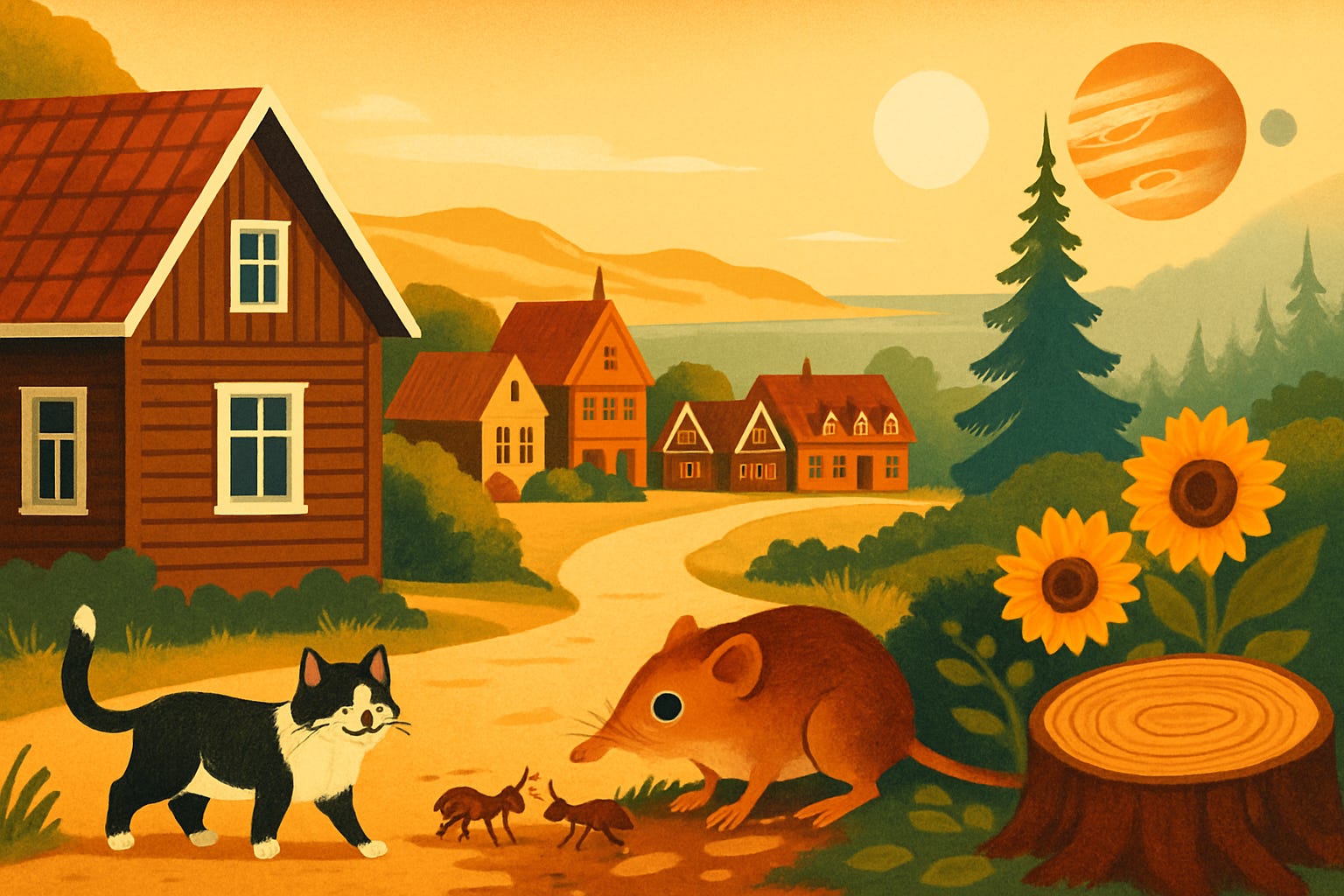
Galileo launched in 1989 and spent eight years orbiting Jupiter, making extraordinary discoveries. It found evidence that Europa likely hides a saltwater ocean up to 100 kilometers deep beneath its frozen surface, containing roughly twice the water of all Earth’s oceans combined. That single finding changed how we think about where life might exist in our solar system.
By 2003, Galileo was running out of fuel. Without propellant, mission controllers could no longer guarantee its trajectory. Left to drift, it might eventually have crashed into Europa. The problem: Galileo had never been sterilized to the standards required for missions to potentially habitable worlds. It could have carried Earth microbes onto the very moon it had spent years studying.
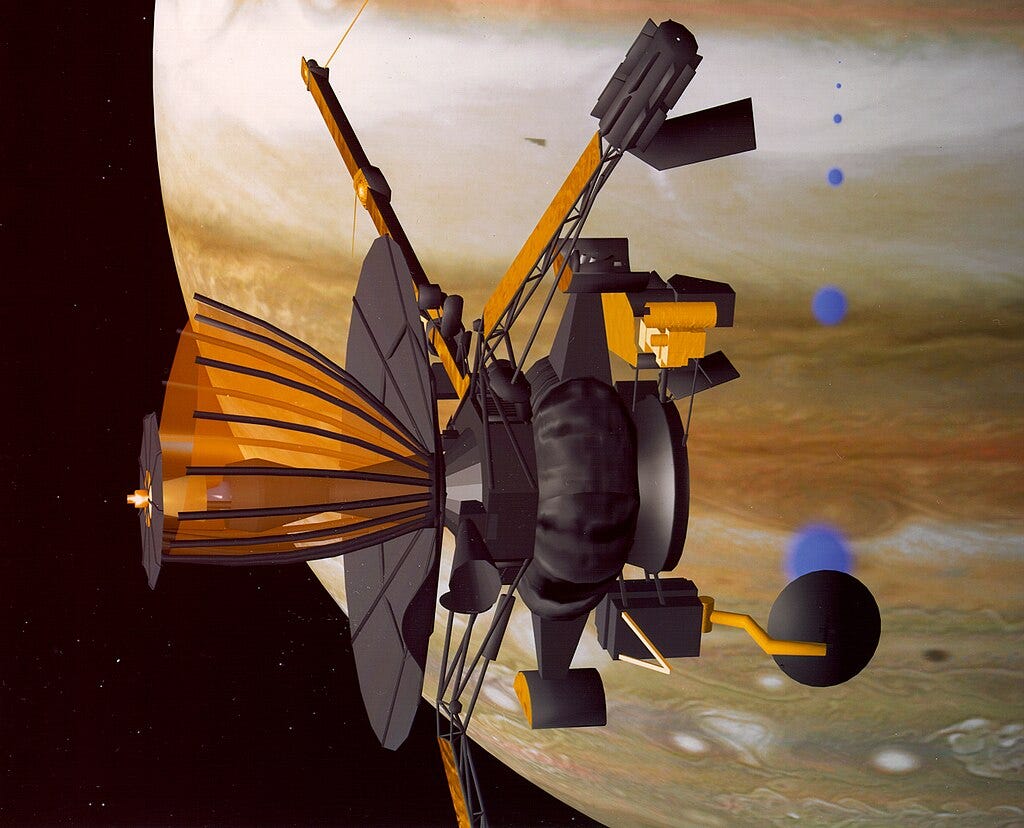
So on September 21, 2003, controllers fired the engines one last time and sent it straight into Jupiter’s atmosphere, where it burned up completely. Jupiter has no surface, no ocean, nothing that life could colonize. It was the safe disposal.
The irony is hard to miss. Galileo was deliberately destroyed to protect the world it had discovered might not be as lifeless as we once thought. Planetary protection at its most poetic.
More gives you what the other newsletters can’t: the rest of the story, answers to your questions, the additional context, updates on developing stories, the connections between topics, and the personal moments that don’t fit polished formats. If that extra layer matters to you, consider supporting this work:

A tree older than civilization, named after a dog
On February 24th, I mentioned the oldest known living tree — a bristlecone pine in California, over 5,000 years old. Eva read that and pointed me to something even older.
In Dalarna, Sweden, on Fulufjället Mountain, stands a Norway spruce called Old Tjikko. Its root system is approximately 9,568 years old, carbon-dated to around 7550 BC. The last ice age had only just released that mountain from glacial ice when this tree took root.
The trunk itself is only a few hundred years old. When a trunk dies, the ancient root system simply grows a new one. Branches that touch the ground sprout fresh roots. The tree keeps regenerating, century after century, from the same root system that has been alive since before writing was invented.
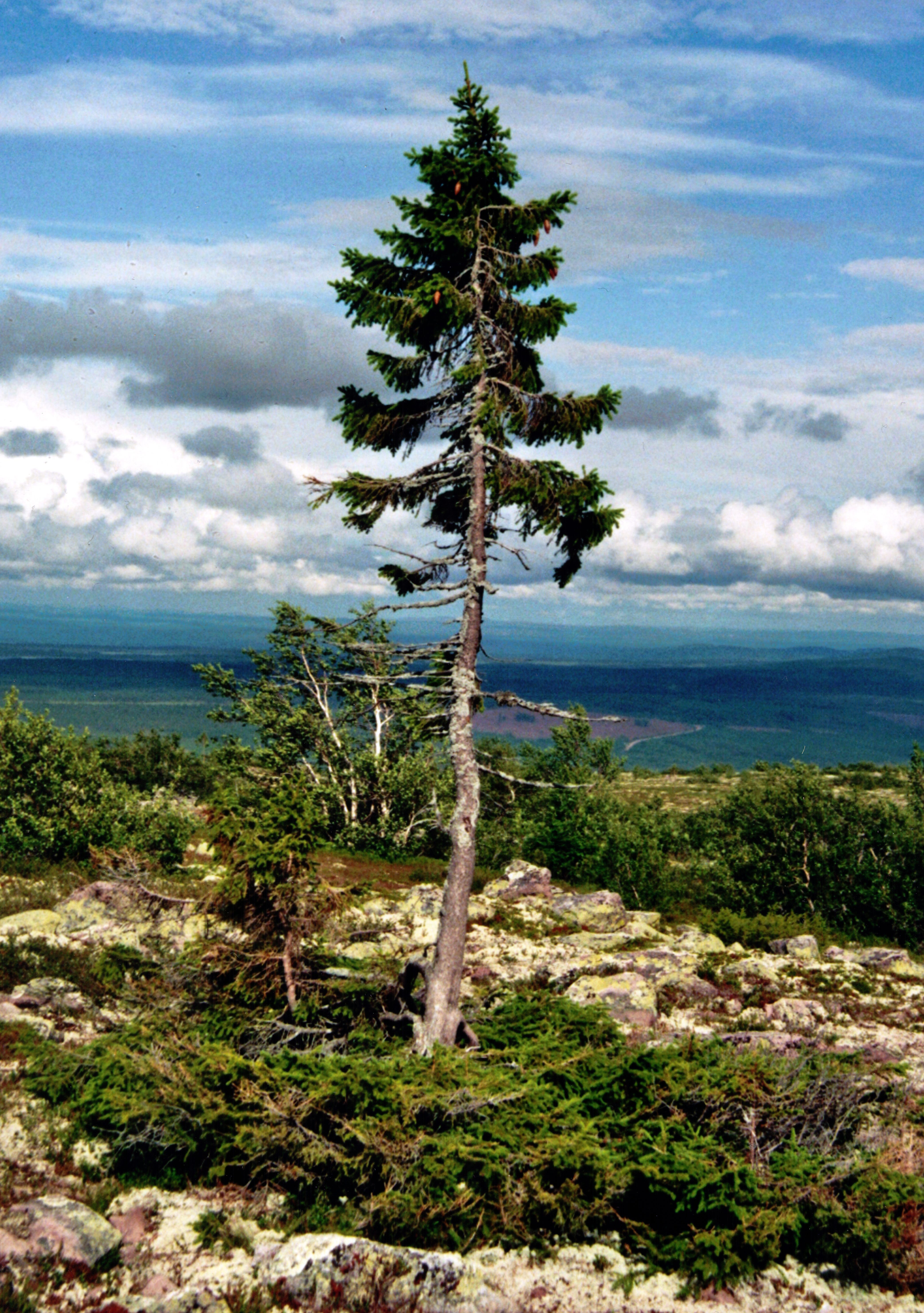
It was discovered in 2004 by ecologist Leif Kullman and his wife Lisa Öberg. They named it after their late dog, Tjikko. I find that detail quietly perfect — one of the oldest living things on Earth, named with ordinary human affection.
Thank you, Eva.
Ants and termites figured out borders. Humans are still working on it.
On February 16th, I shared a 30-second video in Daybreak Notes & Beans showing ants and termites standing in two neat rows along an invisible line, facing each other, neither side attacking. I gave it about 100 words. It deserved more, so I kept reading.
Ants and termites are natural enemies. They compete for food, space, and territory across tropical forests. Yet in some places, they have worked out a truce — and the mechanism behind it turns out to be chemistry.
Both species coat their bodies in chemical compounds that function like fingerprints. When soldiers meet at the border, they read each other’s scent. A familiar profile means: known rival, tolerate. An unfamiliar one means: stranger, attack. Biologists call this “dear enemy” recognition — the principle that a known opponent is less threatening than an unknown one, and that fighting familiar neighbors wastes energy both sides need for other things. Queens, larvae, foraging, survival.
A study in the Colombian Amazon tracked 197 ant and termite species across 283 shared nests and found that primary forests support far more complex cooperation networks than logged secondary forests. Deforestation doesn’t just remove trees. It destroys the intricate web of coexistence that took millennia to develop. The termites decompose wood into fertile soil. The ants aerate the earth and control other insects. Together, they support biodiversity that neither could sustain alone.
The logic ants and termites use is not so different from what skilled diplomats do. You distinguish between a familiar adversary and a genuine threat. You recognize that permanent conflict exhausts everyone. You hold the line not by fighting, but by making the cost of crossing it clear.
The difference, of course, is that ants and termites evolved this behavior over millions of years. Humans keep having to relearn it.
Watch it again here. Two armies, facing each other, choosing not to fight. In thirty seconds, it tells you more about the logic of coexistence than most political speeches manage in an hour.
Zoë Jewell is still reading footprints, and the sengis are delighted
During the pandemic years, when I was hosting a podcast from Canada, I interviewed Zoë Jewell — a vet turned conservationist who had spent years developing a way to identify individual animals from their footprints alone. It was traditional trackers in Africa who first taught her that this was possible: indigenous knowledge that had existed for generations, now combined with JMP statistical software to analyze the geometry of toe pads and stride patterns. WildTrack’s Footprint Identification Technology now reaches 90-96% accuracy across multiple species. We have stayed in touch since the interview, and last month she emailed me about her latest paper.
She was studying sengis — formerly called elephant shrews because of their long, mobile noses. Tiny animals, but she described them with obvious affection: huge eyes, giant whiskers, and what she called “monster drumming feet” for signaling danger. She’s right that they’re extraordinary little creatures.
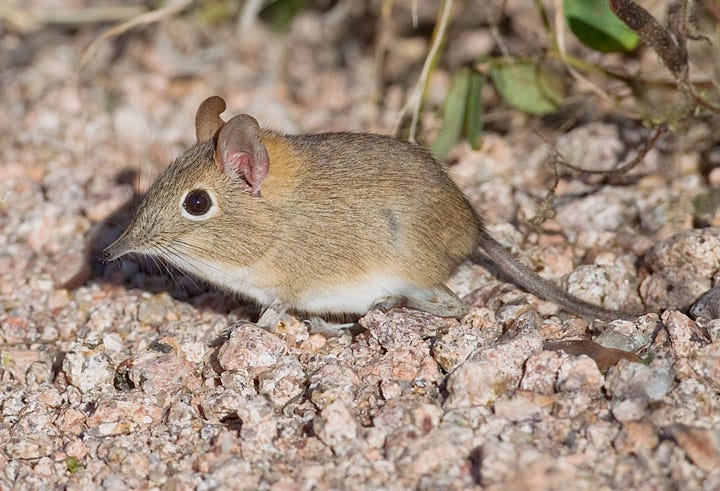
The research challenge was this: two sengi species, the Eastern Rock sengi and the Bushveld sengi, look almost identical. Telling them apart normally requires DNA analysis — expensive, invasive, stressful for the animal. But their feet are slightly different. So Zoë’s team captured sengis using traps baited with oats, peanut butter, and Marmite — which sengis apparently find irresistible — collected footprints on charcoal-dusted paper, then released them unharmed. The footprint model distinguished between the two species with 94-96% accuracy.
Why does it matter? Small mammals are sensitive indicators of ecosystem health. Population changes in species like these often signal ecological disturbance before anything more visible shows up. Monitoring them cheaply and without stress opens up possibilities that DNA analysis never could.
Zoë’s team also found Eastern Rock sengis at a site well outside their expected range — which means the maps were wrong, and non-invasive monitoring is already revealing things we didn’t know.
Thank you for the email, Zoë.
Supporting More means supporting the whole ecosystem of my work — not just this newsletter, but the creative space where I answer your questions, follow up on developing stories, and explore ideas that eventually feed into The Planet, Daybreak Notes & Beans, and Screen Skills. If you value having access to that process, consider becoming a paid subscriber:
Yellow. Van Gogh’s colour, and now an exhibition
Those of you who have followed my writing for a while know that Van Gogh is a recurring presence in my newsletters. He was Dutch, like me. He spent years chasing light in places I have also visited by chasing him. He created beauty; I keep coming back to him.
So when the Van Gogh Museum in Amsterdam opened an exhibition this February dedicated entirely to the colour yellow, I paid attention.
The show is called “Yellow. Beyond Van Gogh’s Colour” and runs through May 17th. It opens with Sunflowers (1889) — the obvious choice, and the right one. Van Gogh used three shades of chrome yellow in that painting: a pale lemon, a deeper lemon, and a yellow-orange. The pigment has darkened over a century, so the museum displays it under low light. What we see today is already extraordinary. The original would have been even more intense.
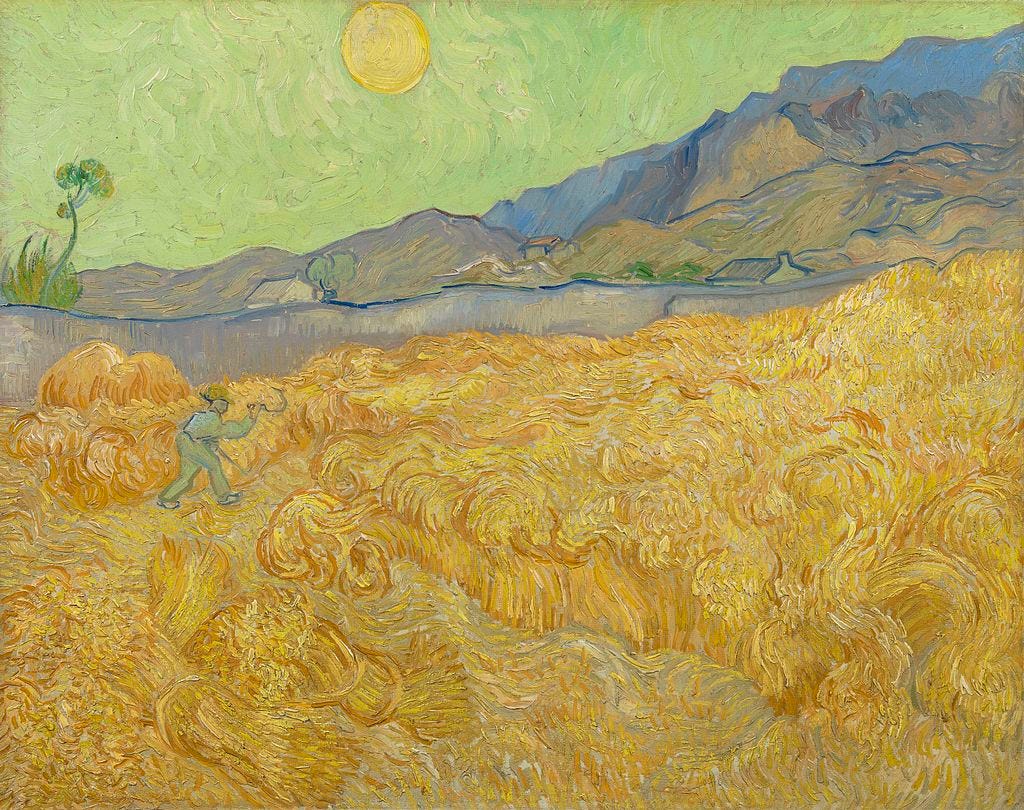
He wrote to his brother Theo from Arles: “Sunshine, a light which, for want of a better word, I can only call yellow — pale sulphur yellow, pale lemon, gold. How beautiful yellow is.”
The exhibition goes beyond Van Gogh to show how yellow preoccupied an entire generation of artists around 1900. Wassily Kandinsky compared yellow to the sound of a blaring trumpet. Marc Chagall painted a yellow room. Hilma af Klint used it to express something spiritual. In fashion and literature, yellow was the colour of the modern, the daring, the slightly dangerous.
The exhibition also asks what yellow smells like — three French perfumers developed scents using citrus, bergamot, and camomile — and what it sounds like, with new compositions by students from the Amsterdam Conservatory. There are two Olafur Eliasson light installations that apparently fill entire rooms with the colour.
I have not been yet. But I will be in the Netherlands in the springtime, and this is already on my list.
The Van Gogh Museum has posted a ten-minute 4K virtual tour of the exhibition on YouTube for those who can’t make it to Amsterdam in person.
Oregon’s last old-growth forests are under threat
Jennifer sent me a link after I wrote about global forest recovery on February 26th, with a simple note: “Is this something you might be able to share?” She was right to flag it.
On February 19th, the Bureau of Land Management published a notice of intent to gut the management plans governing nearly 2.5 million acres of old-growth forest across 18 counties in western Oregon. The proposal would eliminate old-growth and wildlife protections to maximize logging capacity — targeting around one billion board feet per year, four times current levels, matching the industrial harvests of the 1960s before environmental protections existed.
These are not ordinary forests. Low-elevation old-growth Douglas fir and western red cedar store more carbon per acre than almost any ecosystem on Earth. They filter drinking water. They shelter northern spotted owls, coho salmon, and hundreds of species that took millennia to evolve in these conditions. The administration has given the public 30 days to respond. No public meetings are planned.
I am not going to pretend this is good news (my usual newsangle for Daybreak Notes & Beans), because it isn’t. But there is good news in where I found the story. More Than Just Parks is a Substack newsletter run by Jim and Will Pattiz, award-winning filmmakers and conservationists who have spent over a decade documenting America’s public lands. It has been on my recommendations list for Planet readers for a long time, and this piece is exactly why. Sharp, detailed, and clear about what readers can actually do.

The comment period closes on March 23rd. If you want to respond, the full piece at More Than Just Parks explains how to do so.
Thank you, Jennifer.
The Oslo house in my Dutch village
Back in November, I wrote about the Scandinavian gift houses in the Netherlands — the prefabricated wooden homes donated by Norway, Sweden, Finland, Denmark, and Austria after the catastrophic 1953 North Sea Flood devastated the southwestern Netherlands. On November 12th last year, the Dutch government announced that 45 of these houses would receive official national monument status.
I mentioned then that in my village of Burgh-Haamstede, on one of the islands in Zeeland, there is a row of these houses — all Norwegian gifts, all bearing the names of Norwegian cities. And that I always notice the one called Oslo, which, as many of you know, is also where I live.
At the time, I didn’t have a photo of that specific house. Last week I was on the island, and I finally remembered to stop and take one. Here it is.
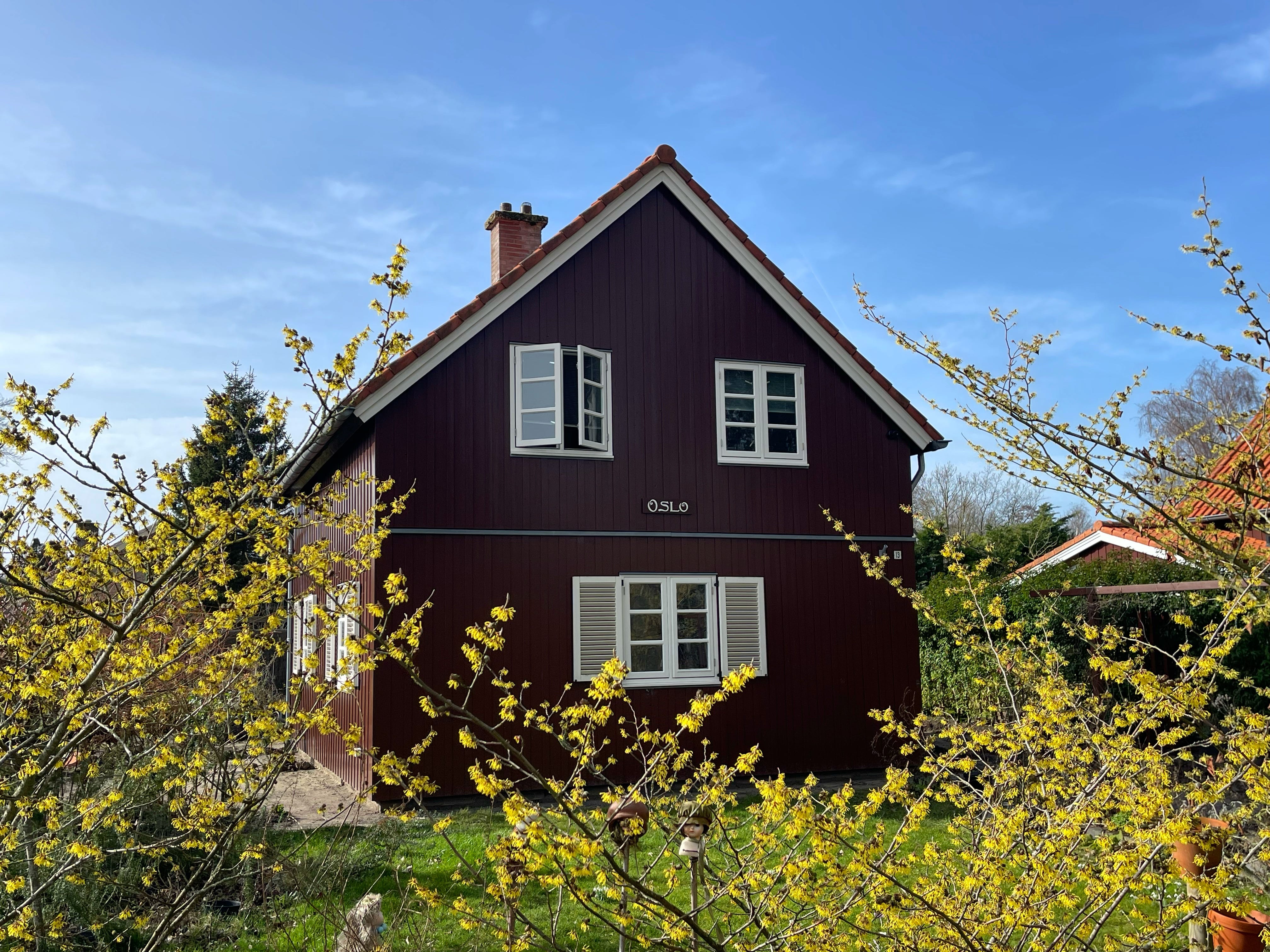
A wooden house on a Dutch island, named after a Norwegian city, given to flood survivors more than 70 years ago, is now a protected national monument. Two places that I consider my home are connected by a nameplate on a quiet street in Zeeland.
The only thing left to do is find a house in Oslo with “Burgh-Haamstede” on it. I’ll keep looking.
This is still a very young newsletter; I started it in January. I’m building More the same way I built my other newsletters — by listening to what resonates and letting the concept develop naturally.
If you have thoughts on what’s working or what you’d like to see, tell me. This space belongs to the community as much as it belongs to me.
Your support makes it possible to deliver my newsletters to you:

Stay inspired,
Alexander
Still here?
Long-term subscribers will recognize many of the places in this one-minute video. Veere, the Delta Works, Zierikzee, the Zeeland Bridge. This is my province — the islands in the southwest of the Netherlands that the 1953 flood devastated, and that Zeelanders rebuilt, protected, and that we love for its history, nature, and beauty.
Don’t miss this one:
The Planet: a weekly newsletter examining American democracy, freedom of speech, and environmental policy through a European perspective. Having lived, worked, and traveled extensively in the US and beyond as a backpacker, diplomat, and journalist, I explore current events through historical context, showing how lessons from the past inform today’s challenges to democratic values and planetary health.
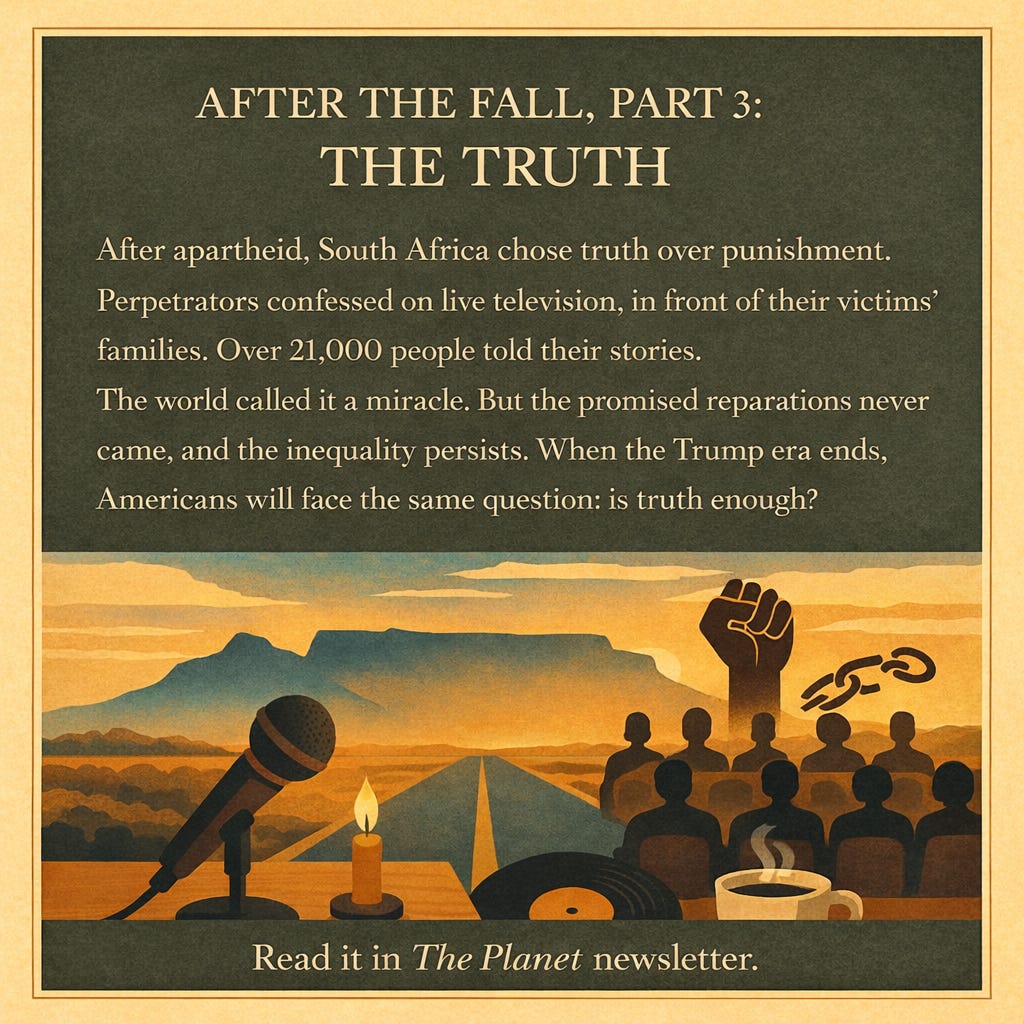
On Thursday, I shared part 3 in the “After the Fall” series in The Planet.
We’re really at the end of this newsletter, but there is always a bit more to share. For instance, have a look at my Patreon:
Last week, I published: The River That Came Back to Life
Or perhaps you enjoyed the newsletter and would like to support my writing by buying me a coffee?
I also write:
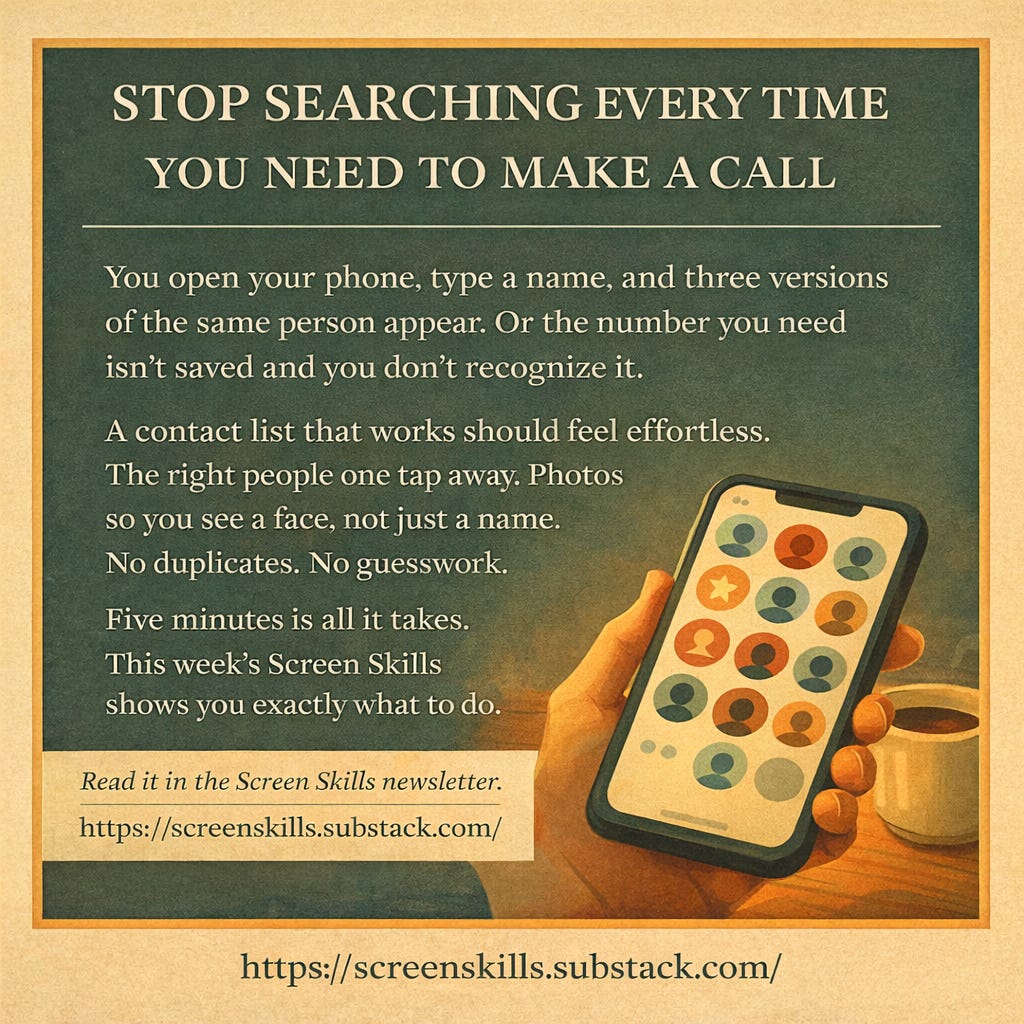
Screen Skills: the only tech newsletter on Substack specifically made for non-technical people. I share basic screen skills that any 20-year-old has instinctively developed in their reflexes, and that older generations often don’t even realize they need. These simple skills make your time on your phone and desktop more enjoyable. I promise to keep it really basic. Read it in three minutes, apply it in two minutes.
Have a look by clicking here:
Read, for instance, Friday’s Screen Skills newsletter:
You’ll learn:
How to find and merge duplicate contacts on iPhone and Android
How to set up a Favorites list so your most important contacts are always one tap away
How to add a photo to a contact so you see a face when they call
How to share your own contact details with someone instantly
How to create a contact from an email or message without typing
Why your contacts might look different on different devices, and how to fix it

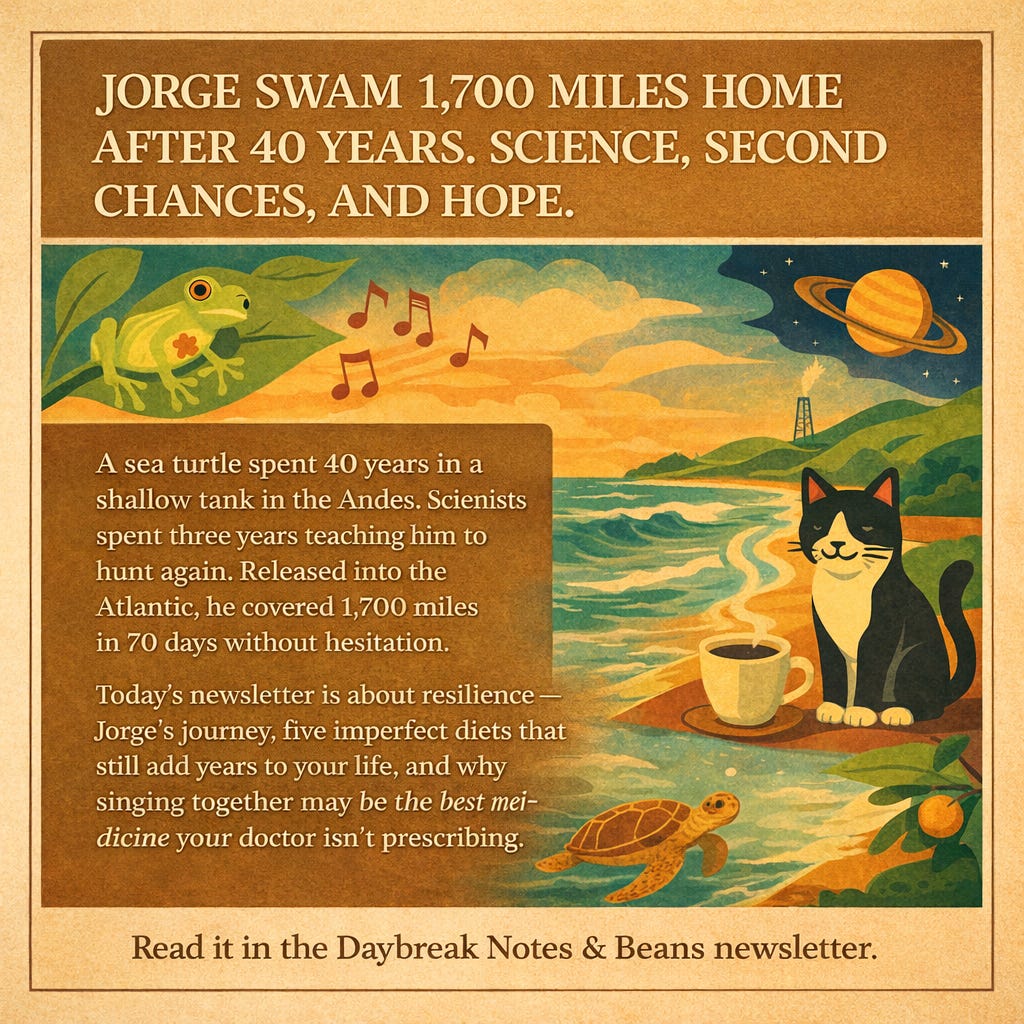
And there is one more newsletter, Daybreak Notes and Beans, focused on positive news to counterbalance the negative headlines you see all day. On most days of the week, I share ten uplifting news stories about science, health, art, travel, archaeology, or any other topic I think you’ll enjoy reading or that will give you hope now that we need it. Try it:
For instance:

"He wrote to his brother Theo from Arles: “Sunshine, a light which, for want of a better word, I can only call yellow — pale sulphur yellow, pale lemon, gold. How beautiful yellow is.”'
Yellow. The sight of it. The scent of it. The sound of it. Wondrous. Thank you for including the exhibition tour. 💛
Thank you especially for the story on public will for accountability. My heart is unable to address this yet.
Love the Zeeland video 🧡