
What David Attenborough Saw in One Hundred Years
How a television series in 1979 changed the way I understood the planet — and why that still matters today

The man who taught a century to see
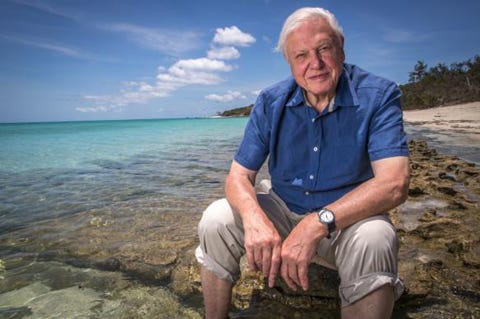
David Attenborough turns 100 today. Born on May 8, 1926, he has lived through the entire arc of modern environmentalism: from a world where nature seemed inexhaustible to one where scientists measure exactly how much we have taken from it and how little remains.
That is a strange century to have witnessed. And nobody has narrated it more clearly, or more beautifully, than he has.
The world before the internet had David Attenborough
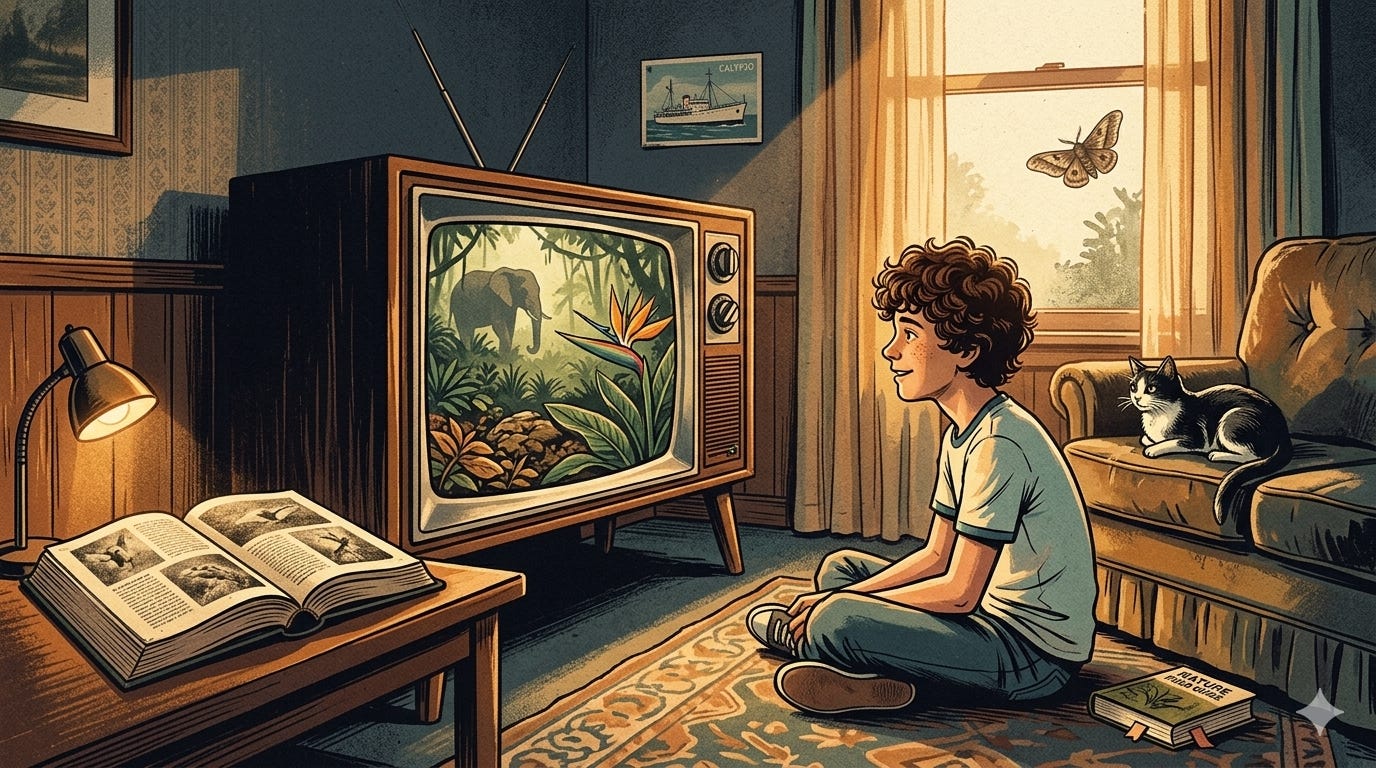
Life on Earth arrived in 1979, when I was in high school, and it changed how I understood the planet I lived on. Those were the days before everything was accessible on the internet. Anything I wanted to know about nature, I had to look up either in my parents’ encyclopedia, with its grainy black-and-white photographs, or in the library. Seeing his films on television changed the way I viewed the world.
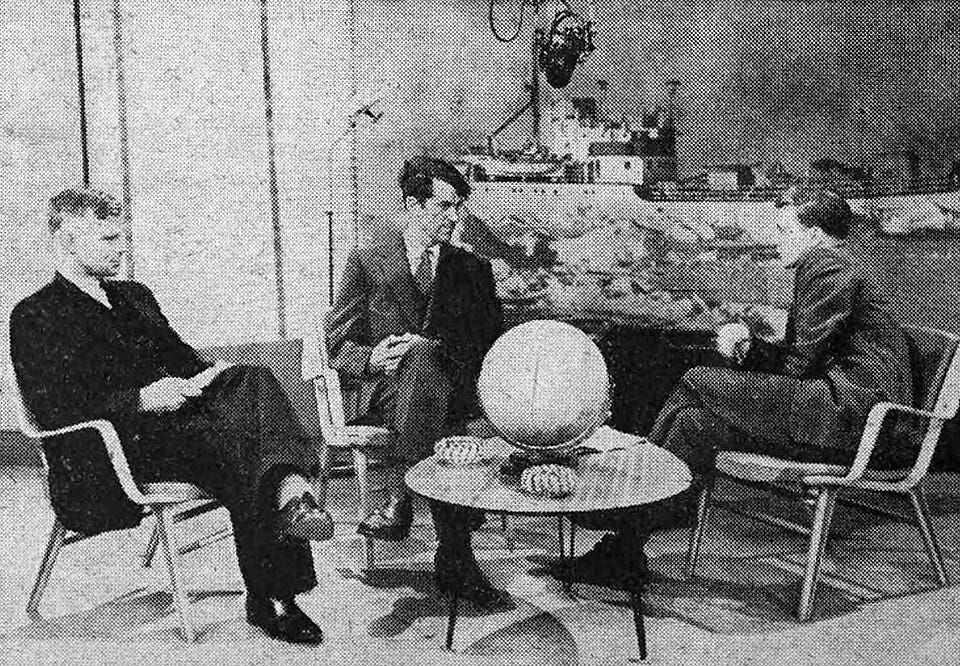
I should add Jacques Cousteau here. Cousteau’s films aboard the Calypso were equally formative for me, though in a different direction: Cousteau for the oceans, Attenborough for the living world on land. Together, they opened something up. It wasn’t just that they showed animals I would never encounter in the Netherlands. Attenborough showed relationships, systems, the long logic of evolution working itself out over hundreds of millions of years. He made complexity feel like wonder instead of confusion.
I have recently written about how formative the high school years are, about the art you encounter then, the books you first read, and the ideas that lodge themselves permanently. I have no doubt that my fascination with nature, science, and travel was shaped, in part, by his storytelling. There is no single straight line from Life on Earth to the work I ended up doing. But when I connect the dots of life experiences that brought me to where I am, that series is one of them.
A life on a changing planet
Attenborough was in his 50s when scientific warnings about biodiversity loss began to break into public view. He was in his 60s when the IPCC released its first assessment report on climate change. He was in his 70s when the Millennium Ecosystem Assessment told the world that about 60 percent of the ecosystem services humans depend on were being degraded or used unsustainably. He was in his 90s when Johan Rockström and colleagues at the Stockholm Resilience Centre updated and quantified the planetary boundaries framework, the nine Earth-system limits within which humanity can safely operate, and showed clearly how many we had already crossed.
Attenborough did not retreat into pure celebration of nature while all this was happening. Blue Planet II in 2017 did more to shift public awareness of plastic pollution in the oceans than a decade of policy reports. Our Planet in 2019 opened with his voice saying, plainly, that the natural world was in trouble. A Life on Our Planet, released in 2020, was his most direct statement: a witness account, he called it. The testimony of a man who had seen the planet at its most extraordinary and was watching it be diminished.
I watched A Life on Our Planet during the first winter of the pandemic, in Ottawa, where the city was quiet and frozen. His summary of what he had seen in one century was almost unbearable. The percentage of wilderness left. The percentage of large fish remaining in the ocean. The percentage of flying insects that was gone from European skies.
That last figure, some 80% in just 27 years, stays with me because it connects to something I have spoken about many times when giving talks on biodiversity loss. When I was young, and my family drove to France on holiday, it was my job at every petrol stop to take a bucket of water and a scraper and clean the windshield. There were so many dead insects on the glass that they blocked our view. I have mentioned this in talks over the years, and more than once a student has told me, politely but clearly, that they thought I was exaggerating. They didn’t believe it. Anyone from my generation will remember it. But we forget slowly, because the change never happens overnight. You simply notice, one year, that there is nothing on the windshield anymore. That you have driven for days without a single insect hitting the glass. The absence becomes normal before you ever named what was lost.
Attenborough understood this before most of us did. And in A Life on Our Planet, he did not end in despair. He ended on what was still possible. That took more courage than the statistics.
More gives you what the other newsletters cannot: the deeper context, the historical frame, the European angle on news you are already following. If that layer of the story matters to you, consider supporting this work:
What he actually changed
It is difficult to measure the influence of a single voice across a century. But I think Attenborough changed something real in the way millions of people relate to the natural world. He had the patience to explain why a coral reef is not just beautiful but structurally important, why the loss of a top predator reshapes an entire ecosystem, and why the disappearance of a forest in one part of the world has consequences for rainfall patterns thousands of miles away. He understood, before most public communicators did, that wonder and urgency are not opposites. The best way to make someone care about losing something is to first make them fall in love with it.
I believe that principle shaped my own work, even if I cannot point to a specific moment when the influence took hold. When I gave talks on environmental issues over the years, I always included beautiful photographs of nature in my presentations. I noticed that many other speakers relied heavily on graphs: CO2 levels curving steeply upward, biodiversity indices curving steeply downward. Those graphs carry their own convincing power, and I used them too. But I always combined them with images of what was actually at stake. A coral reef at full color. A forest canopy from below. A coastline before the plastic arrived. I cannot trace that choice directly back to Attenborough. But I think it is impossible that a childhood spent watching him show the living world in all its improbable beauty had nothing to do with it. He taught a generation that nature was worth looking at carefully. That looking carefully was itself a form of argument.
I remember how excited I was when he spoke at COP26 in Glasgow in 2021. Here was a man who had been building that love for half a century, now standing at the largest climate summit in history and asking world leaders to act. It felt like the two tracks of his life, the celebration and the warning, meeting on the same stage.
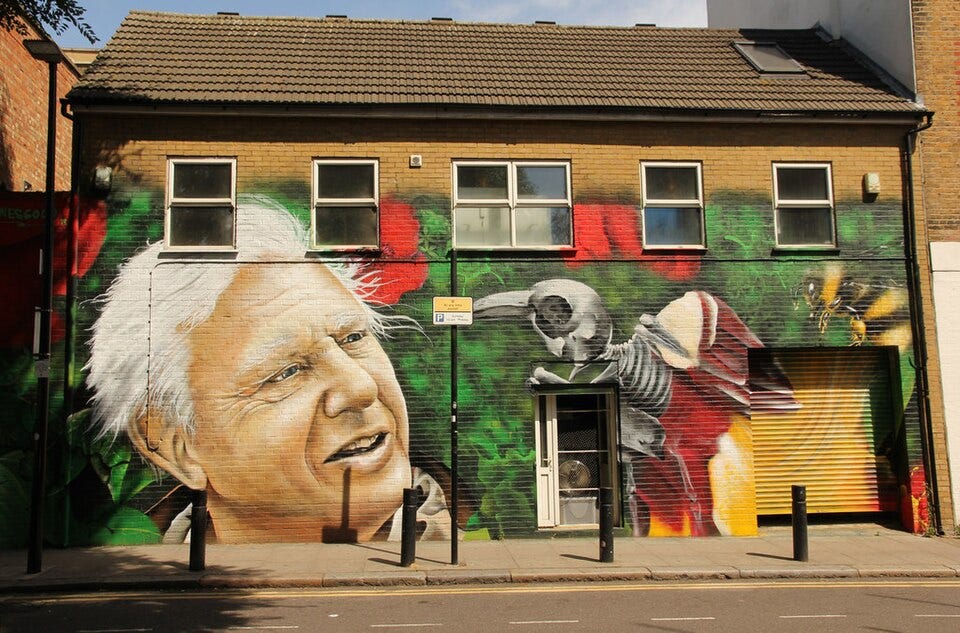
A hundred years, and still not enough has changed
Rockström’s planetary boundaries framework suggests that humanity has already pushed several of the nine safe limits beyond their safe operating ranges, including climate change, biosphere integrity, land-system change, and the flow of novel entities such as plastics and chemicals. Freshwater systems are under growing pressure too. The biodiversity figures are stark. Studies suggest that around a million species are at risk of extinction in the coming decades if current trends continue. The living world that Attenborough introduced to hundreds of millions of viewers is being dismantled at a speed unprecedented in human history.
He has known this for decades. He kept working anyway.
And yet the political response remains painfully slow. The entire world agreed on a limit of 1.5 degrees Celsius of warming. We are at that threshold now. It is no longer a future risk. It is where we are. And it is clear, looking at the trajectory of global emissions, that we will cross it. Climate change, which was never the top priority for enough politicians even in better times, has dropped further down the agenda in an era when democracy itself is under pressure, when large portions of electorates across the Western world are choosing parties that offer short-term comfort over long-term survival.
The local elections in his own country, the UK, whose results are coming through today on his 100th birthday, are a reminder of how much persuasion remains to be done. There is still so much work to be done to convince people that respecting each other and the natural world is not idealism. It is the only practical basis for a society that wants to exist in decent shape for the next generation.
The readers who made the same journey
I am writing this knowing that most of you reading it are not so far from my own age. Many of you made the same journey through those decades. You remember the insects on the windshield. You watched Cousteau on the Calypso. You sat in front of a television in the 1970s or 1980s and felt, for the first time, the full scale of what the natural world actually is.
You also watched it change. Slowly at first, then in ways that became impossible to ignore. And I suspect many of you feel, as I do, a complicated mixture of grief and determination. Grief for what has gone. Determination because change is possible, and we have seen it.
I write this from a city where almost every car that passes me on the street is electric. The air is cleaner. There is less noise. The shift that seemed impossible a decade ago is happening. It is not enough yet. But it is proof that when people decide something matters, things move.
David Attenborough spent a century making people believe that the natural world matters. That is an extraordinary life’s work. And it is not finished.
Happy birthday, Sir David.
More is also where the rest of the story lands. The follow-ups that don’t fit Daybreak Notes & Beans. The deeper dives. Morning Compass. The reader questions that deserve a real answer. The personal moments and the European perspective on what Americans are living through. If that layer of the work matters to you, consider becoming a paid subscriber:
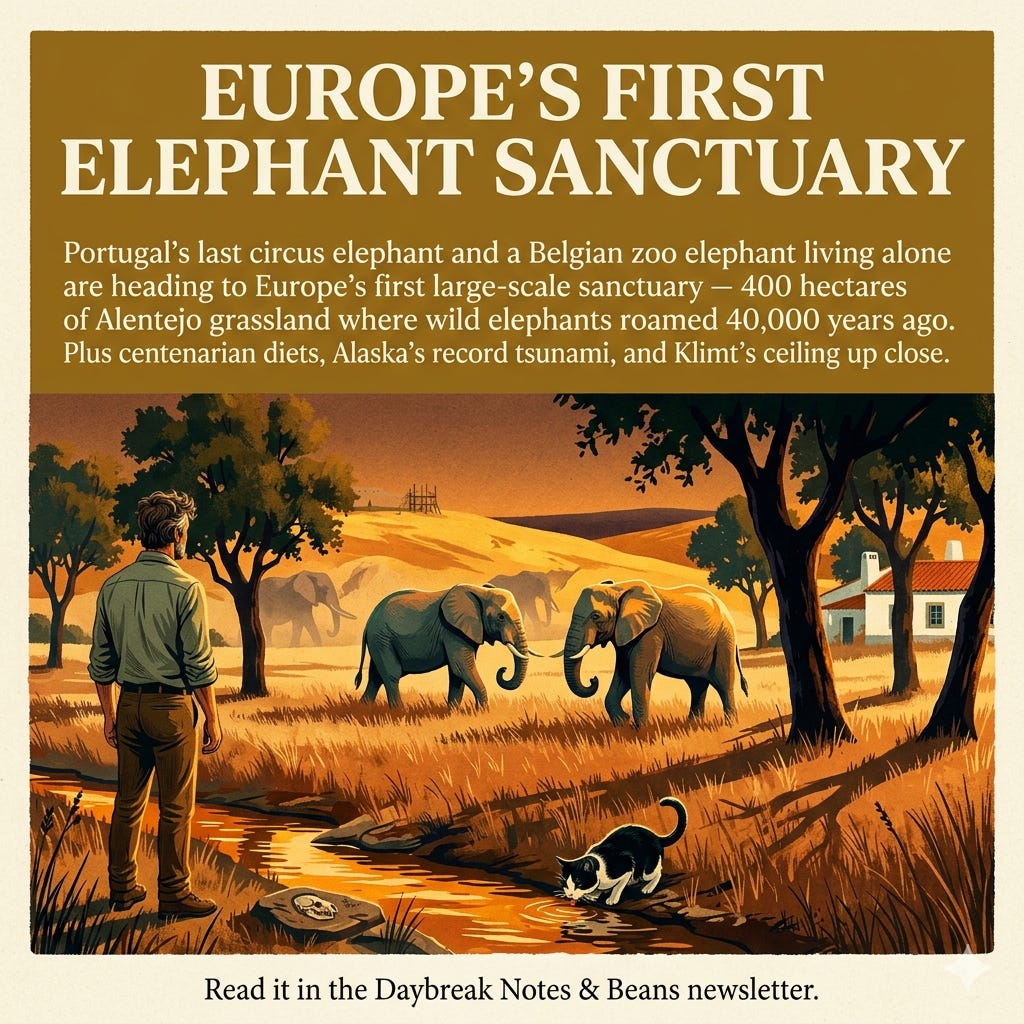
If you got this far, I think you will also like what I published yesterday:

"The best way to make someone care about losing something is to first make them fall in love with it."
So true. He did that for you. He did that for us. This is both a beautiful tribute to the man and a grave warning. You and Sir David have been showing us how much we will lose if we don't take action. After slow, small steps forward, we made a horrifying jump backward. Appreciation and more work to be done. Thank you, Alexander.
Happy birthday, Sir David 🤍
Perfect homage/gift to an extraordinary man and individual. Precious the reference to Cousteau. Rewarding reading.