

More stories that continue: Bailey the Cat's Mission, the Train That Kept Running, and When Pets Started Watching TV
Plus: Clark Art Institute mysteries, Oslo ice crystal physics, and resistance art connections

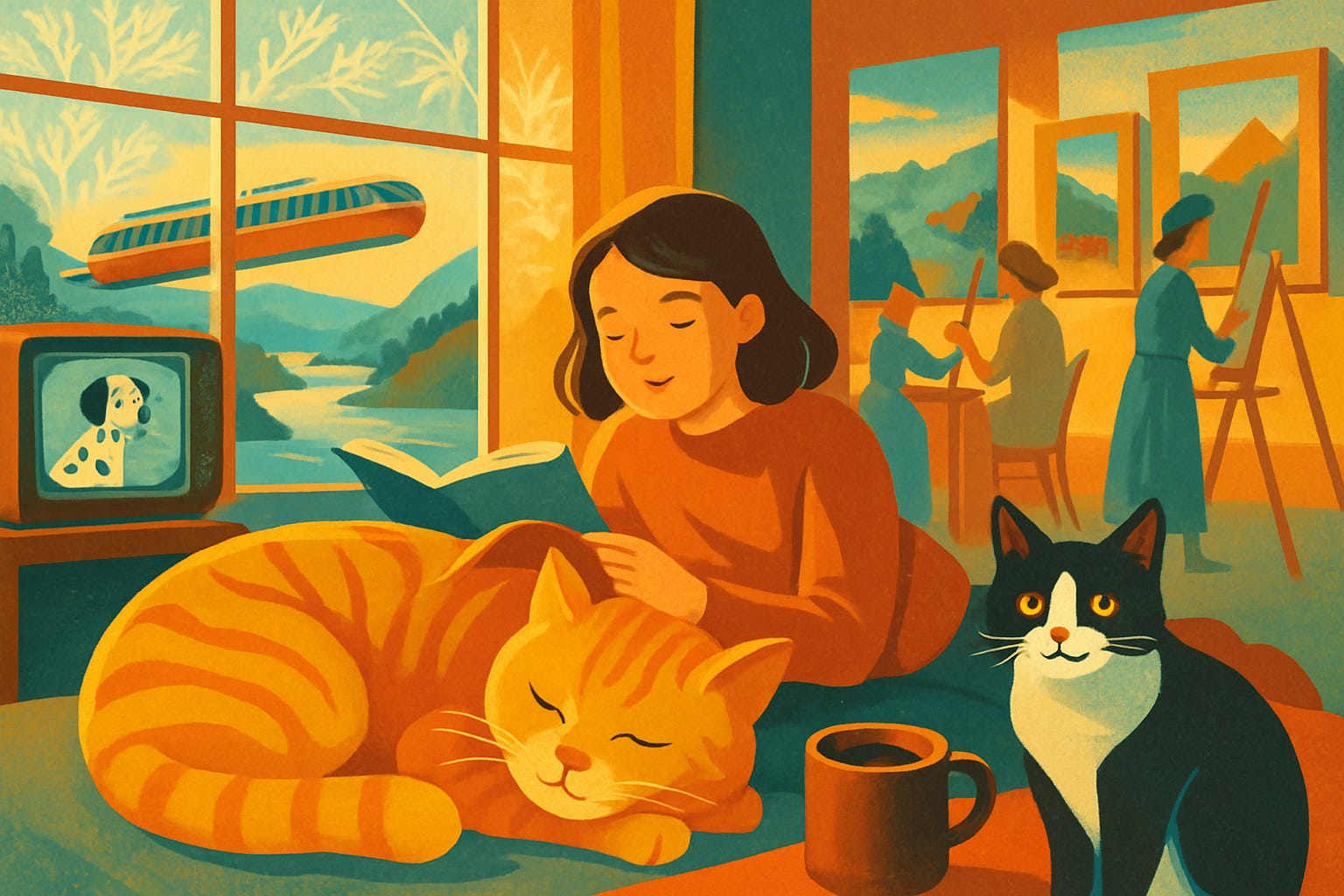
Reader questions keep sparking the best stories. Kerry read my story about Munch, then wrote about the exhibits at the Clark Art Institute. Mike saw the restored 1902 film and loved discovering that the century-old German suspended railway was still in operation. Lisa and Julie recognized the famous cat in a video I posted on Notes. Michael saw the Dalmatian puppy and wondered when pets started watching TV. And my Oslo window this morning reminded me why snow appears white.
This is what More does best—following the threads you start.
More gives you what my other newsletters can’t: the rest of the story, answers to your questions, the additional context, updates on developing stories, the connections between topics, and the personal moments that don’t fit polished formats. If that extra layer matters to you, consider supporting this work:
That cat has a story
I posted a video on Notes showing a little girl reading to an orange tabby curled in her arms. The cat listened intently, utterly content. Eleven thousand people clicked on it within days.
Lisa immediately recognized the cat: “That’s Bailey, no ordinary cat!” Julie filled in the rest: Bailey’s human is Erin Merryn, author and founder of Erin’s Law.
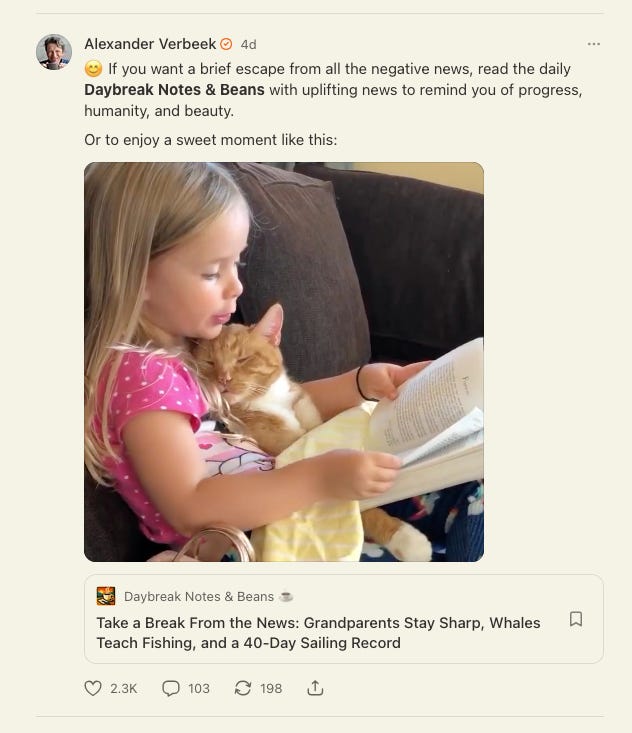
Bailey died in December 2018 after 14 years of participating in elaborate scenes with Erin’s daughters. He took baths, wore costumes, rode in strollers, and sat through story time like the cat in my video. His Instagram account, “Bailey No Ordinary Cat,” made him famous for behavior that seemed almost human in its patience and gentleness.
After Bailey died, Erin adopted Carrot, another orange tabby who inherited the role. Carrot became an Instagram celebrity, appeared on Ellen, and now has her own bestselling book, “Diary of a Cat Named Carrot,” written in the kitten’s voice about her first year from shelter to viral fame.
But the cats are connected to something more serious. Erin’s Law requires schools to provide age-appropriate education about recognizing, preventing, and reporting child sexual abuse. Erin Merryn is a survivor and advocate. The law has been adopted in many US states. You can learn more at erinslaw.org.
So yes, the video shows a sweet moment. But behind those patient cats and those little girls reading aloud is a woman using her platform to protect children. Bailey wasn’t just no ordinary cat. He belonged to someone doing extraordinary work.
Snapshot
Oslo this morning. I found ice crystals on the window:
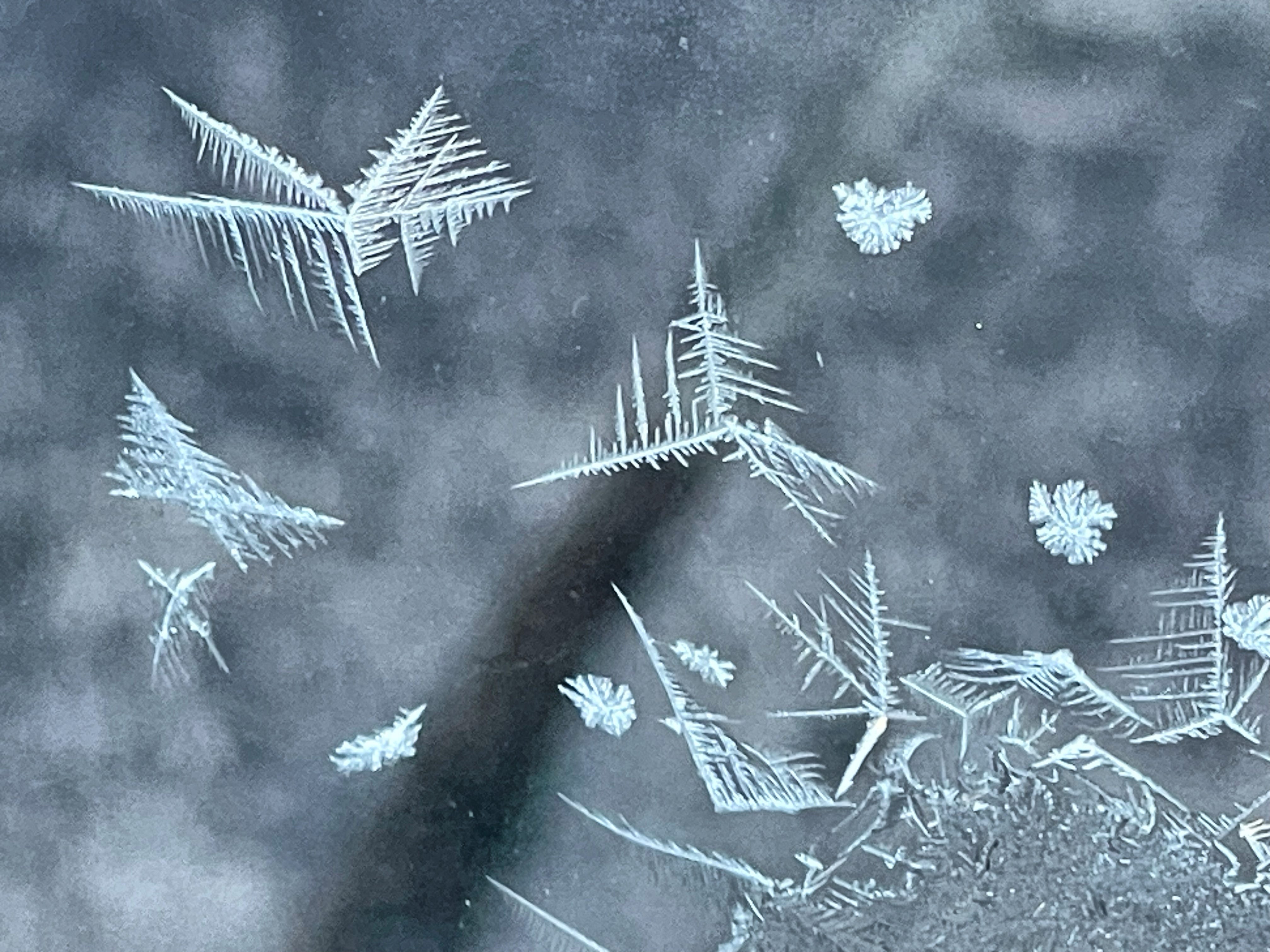
Yesterday in Daybreak Notes & Beans, I wrote about why snow appears white when it’s actually clear ice. The answer is geometry—countless ice crystals scattering light in all directions.
These window patterns follow the same physics. Warm indoor air meets the frozen glass. Water vapor skips the liquid phase entirely and deposits directly as ice, branching out in hexagonal shapes. The same six-sided structure that makes snowflakes white creates these feathery designs on my window.
Oslo’s January nights create the perfect conditions for this: 20°C inside, -10°C outside. That temperature gap drives rapid vapor migration to the coldest surface. High humidity indoors feeds the denser patterns, and the extreme cold preserves them long enough to photograph before they fade.
Free winter art. Physics at work on glass instead of falling through the air. Love it.
The train that kept floating
Mike loved the 1902 Wuppertal Schwebebahn video I shared in Daybreak Notes & Beans last Sunday. But his real delight came from learning the suspended railway is still operating 125 years later, moving 75,000 passengers daily through the same German valley.
The Schwebebahn opened on March 1, 1901, after engineer Eugen Langen convinced the towns of Barmen, Elberfeld, and Vohwinkel to try his hanging monorail design. Construction took five years, using 486 steel pillars and 19,200 tons of iron. Emperor Wilhelm II drove a test train himself on October 24, 1900, before the public launch.
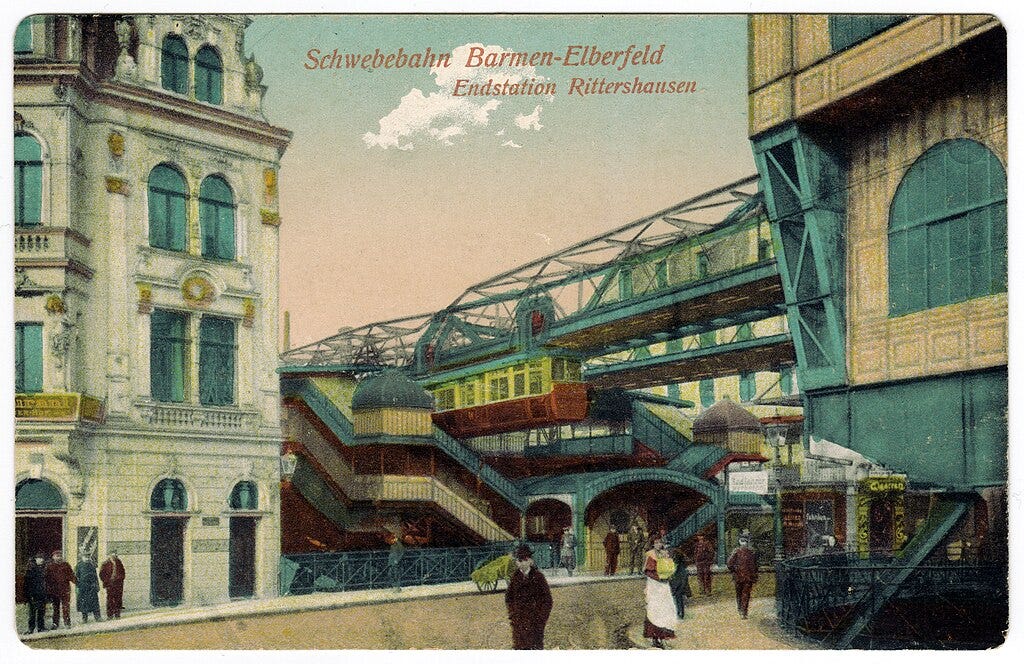
The railway was bombed during World War II but was quickly rebuilt. It survived the 1999 accident that killed five people when workers forgot to remove a metal claw from the track. It endured multiple closures for safety upgrades and modernization projects. The most recent shutdown lasted nine months in 2018-2019 after sections of the power rail fell.
Today’s Generation 15 trains—introduced in 2016—feature air conditioning, LED lights, and energy recovery during braking. The 13.3-kilometer route takes 30 minutes, running 12 meters above the Wupper River and 8 meters above the valley road. The system connects 20 stations and operates within Germany’s regional transit network.
The Schwebebahn has carried over 2 billion passengers since opening. It inspired Japan’s Shonan Monorail, which became a sister railway in 2018. The original Kaiserwagen—Wilhelm II’s test train from 1900—still runs on special occasions and charter events.
Watch how the modern ride compares to that 1902 film (video: historianblood 2023):
The exhibits Kerry mentioned
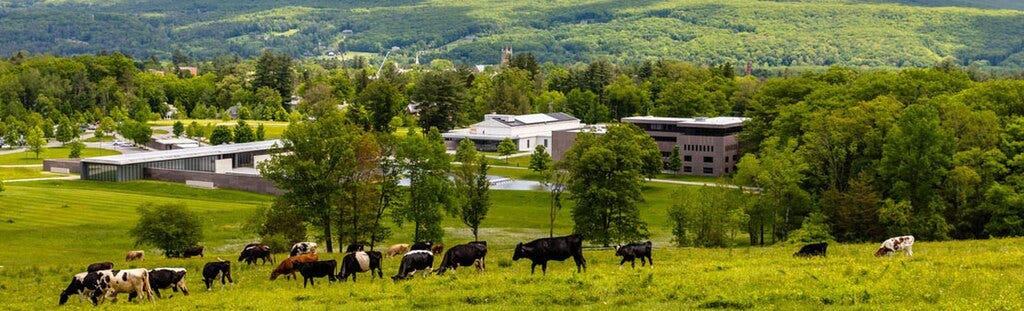
Kerry mentioned three exhibits at the Clark Art Institute in Williamstown, Massachusetts, that made a lasting impression. The Munch show from about a year ago (which prompted his comment, since I posted about the Munch exhibition in Kristianstad and later followed up with a snapshot and story about his self-portrait from age 23). British women artists during World War II. And the one that intrigued me most: Caribbean painters from Martinique and Haiti who returned to study in France during the French Revolution.
That last detail sent me searching, because formal art training for colonial artists during the French Revolution (1789-1799) was rare amid slavery and upheaval. But Kerry’s memory points to an interesting story to share.
The Clark ran “A Room of Her Own: Women Artist-Activists in Britain, 1875–1945” from June through September 2025. The exhibit showcased 87 works by 25 women who defied social norms through paintings, prints, stained glass, and embroidery. Laura Knight’s “Take Off” depicted the Women’s Auxiliary Air Force. Others memorialized the Women’s Land Army. These artists claimed studios, clubs, and public spaces—echoing Virginia Woolf’s call for “a room of one’s own.”
The Caribbean painters’ angle is more elusive. No exact exhibit matches Kerry’s description, but the period references figures like Guillaume Guillon-Lethière, who was born in Haiti and studied in Paris before the Revolution. His portraits challenged racial hierarchies at a time when formal art education for artists from the colonies was nearly impossible.
The Clark has featured global modernists and diaspora artists in various programming. Their outdoor sculpture exhibition “Ground/work 2025” (running through October 2026) features craft-inspired works by international artists that explore cultural journeys and transformative experiences.
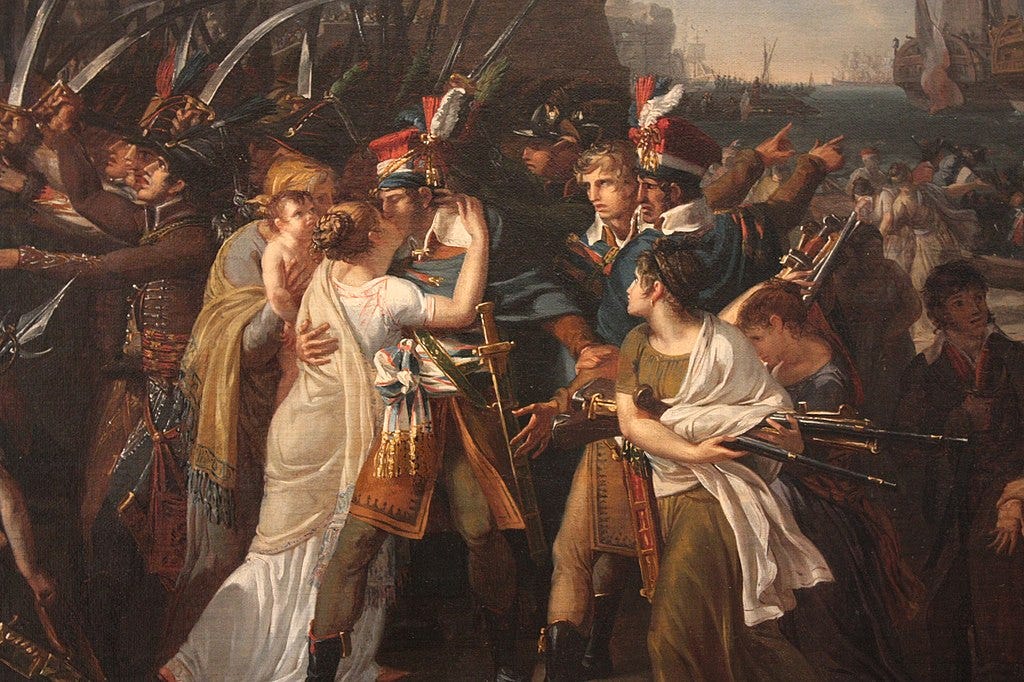
What strikes me is how these stories connect. British women claiming space in male-dominated art worlds. Caribbean artists traveling to Paris despite slavery and revolution. Both groups are transforming exile and exclusion into artistic achievement—the same defiant creativity I wrote about yesterday in The Planet when discussing Minneapolis resistance art. Artists continue creating in difficult circumstances. I’ll likely return to that Minneapolis story soon.
The Clark sits on 140 acres in the Berkshires, offering free admission on First Sundays. If you’re near Williamstown and love art that tells stories of resilience, it’s worth the visit.
The serious answer to a funny question
Michael Dunne watched that video I posted on Notes of a Dalmatian puppy, fascinated by “101 Dalmatians” on TV, and asked: “When exactly did pets start watching television? Has anyone done a PhD on this subject?”
The answer surprised me.
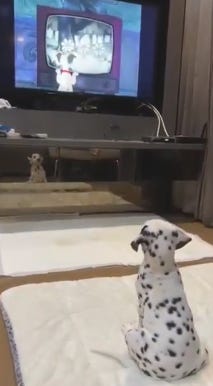
Pets have been watching TV since the 1950s and 1960s, when sets first entered American homes. Owners reported cats and dogs reacting to wildlife shows, barking at on-screen stampedes, and pawing at the screens. No precise “start date” exists, but anecdotal reports from the late 1950s describe these behaviors regularly.
Modern high-frame-rate digital TVs made viewing more engaging for pets. Older analog sets flickered because dogs and cats process visual information faster than humans. The digital shift in the 2010s removed that flicker, making screens easier for animals to watch.
Scientific research began in earnest around 2008. Dr. Sarah Ellis and Dr. Deborah Wells studied cats watching videos and found they observed animal clips for about 6 percent of the time before losing interest. A 2013 study in Animal Cognition confirmed that dogs can visually recognize other dogs on screens and distinguish them from other animals.
As for PhDs: Lane Montgomery, a doctoral candidate at Auburn University, led a 2025 study published in Scientific Reports showing that dogs’ TV habits vary by personality. Excitable dogs track objects on screen as if they’re real. Anxious dogs respond more to non-animal sounds like doorbells or car horns. An honors thesis by E. Ledbetter in 2024 studied what one dog liked watching on television.
So yes, Michael, people are seriously studying this. The Dalmatian puppy scene is part of decades of documented pet behavior. Thank you for that question. Like all other questions and comments, I enjoyed the research and the stories I found. I hope all readers did.
Stay inspired,
Alexander
More gives you what the other newsletters can’t: the rest of the story, answers to your questions, the additional context, updates on developing stories, the connections between topics, and the personal moments that don’t fit polished formats. If that extra layer matters to you, consider supporting this work:
Still Here?
If you missed yesterday’s newsletters, here they are (if you read all three, I would love to hear which one is your favorite):


"British women claiming space in male-dominated art worlds. Caribbean artists traveling to Paris despite slavery and revolution."
Resistance art featured in the The Planet and Clark Art Institute. Looking forward to a deeper dive of Minneapolis. Thanks, Kerry!
Remarkable story of Bailey and Carrot and Erin's Law. Thanks, Lisa and Julie!
Beautiful winter window art ❄
A history of pets watching tv is great fun. One of my dog pals was fooled by tv doorbells and ran to the front door every time. I told this story before about my friend's dog who was not allowed to watch tv. If a dog appeared on screen, pupper would lose his mind and attack the very large, expensive set. Thanks, Michael!
I might have just checked train connections to Wuppertal. I haven't been there. Thank you 😊.